
Picture this: You’re running a $3 million home service company. Trucks are rolling, phones are ringing, and customers are leaving good reviews. On the surface, everything looks like success. Your team is busy, money is coming in, and to outsiders, it seems like you’ve built a thriving business.
But behind closed doors, the picture feels less certain. Payroll keeps climbing, materials costs eat away at margins, and even though cash is flowing, you can’t say for sure whether you’re making a healthy profit or barely breaking even. Should you raise prices? Add another technician? Cut back on spending? Every decision feels like a guess because you don’t have the data to back it up.
This is where so many contractors get stuck: activity without clarity. They work harder, take on more jobs, and push their teams to the limit—all while flying blind. Million-dollar choices get made on gut instinct, leaving the business exposed to risks they don’t even see coming.
The contractors who build lasting wealth play a different game. They track the right numbers, use data to guide decisions, and turn information into confidence. For them, growth isn’t a gamble—it’s a strategy.
So the real question is: six months from now, will you still be running on assumptions, or will you finally have the numbers that tell you exactly where your business is headed?
The $500,000 Data Blindness Problem
Let me share some numbers that’ll shock you about the cost of not tracking metrics.
The Hidden Losses:
- Contractors without systematic tracking lose an average of 15-25% profit annually to inefficiencies they can’t see
- Poor pricing decisions cost the average $2M contractor $150,000-$300,000 annually
- Lack of customer data tracking results in 40% lower customer lifetime value
- Operational inefficiencies that could be eliminated with proper metrics cost 10-20% in lost productivity
The Data-Driven Advantage:
- Contractors who track key metrics systematically are 67% more profitable than those who don’t
- Data-driven pricing decisions increase profit margins by 18-28% on average
- Systematic customer tracking increases lifetime value by 35-50%
- Performance tracking reduces operational costs by 12-22%
The Decision-Making Reality: You’re already collecting most of the data you need—you’re just not analyzing it systematically to make better business decisions.
The Psychology of Metric-Driven Success
Before diving into specific metrics, let’s understand why tracking numbers is so powerful for business success.
Objective Reality vs. Subjective Perception: What feels like success might actually be mediocre performance when measured objectively. Metrics provide reality checks that prevent costly delusions.
Pattern Recognition: Human brains are excellent at recognizing patterns—but only when we have clear data to analyze. Proper metrics reveal patterns that gut feelings miss.
Accountability and Focus: What gets measured gets managed. Tracking metrics creates accountability and focuses attention on what truly drives business success.
Confidence in Decision-Making: Data-driven decisions feel less risky and more confident because they’re based on evidence rather than guesswork.
Continuous Improvement: You can’t improve what you don’t measure. Systematic tracking enables continuous optimization and improvement.
The Five-Category Metrics Framework
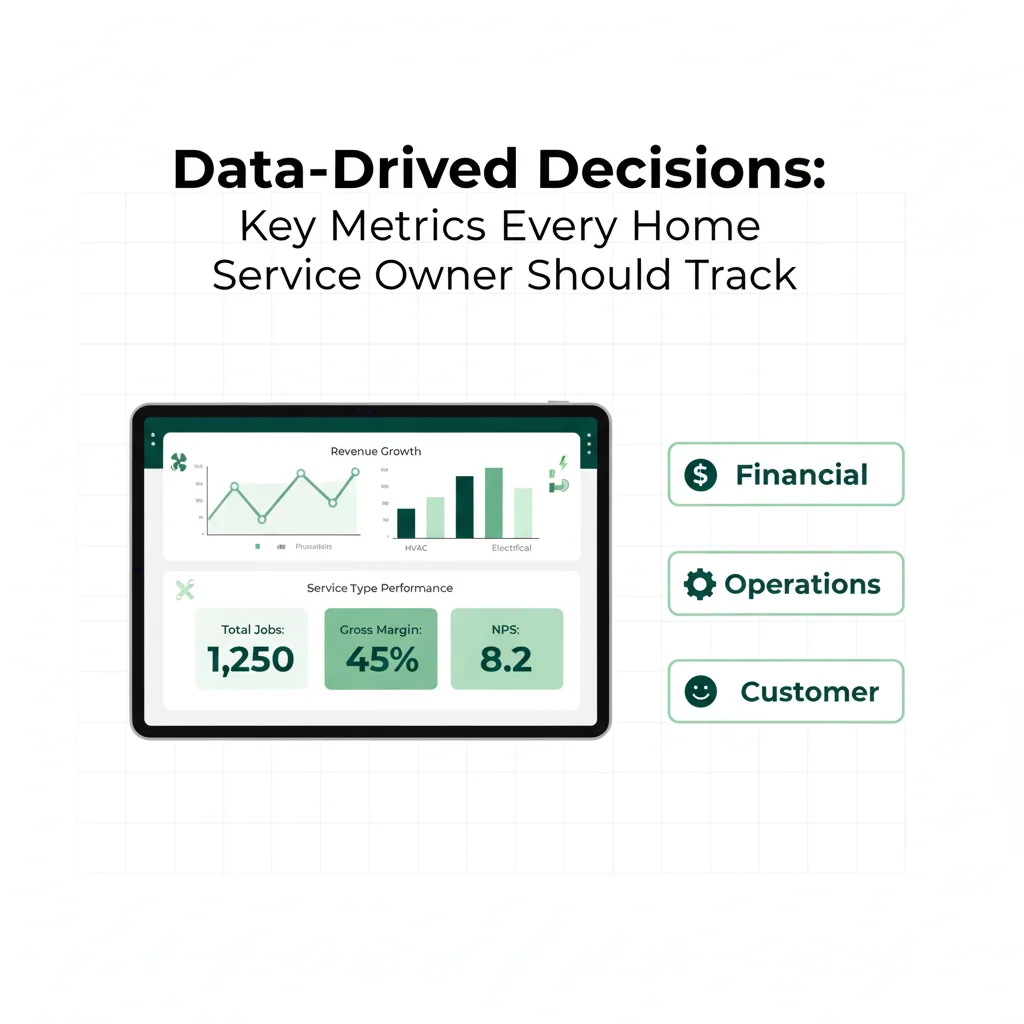
Here’s the comprehensive system for tracking the numbers that actually matter for home service business success:
Category 1: Financial Performance Metrics
These metrics tell you whether your business is actually making money and building wealth.
Revenue Metrics:
Total Revenue Growth:
- Monthly Revenue: Track monthly revenue trends and seasonal patterns
- Year-over-Year Growth: Compare current performance to previous year
- Revenue per Customer: Average revenue generated per customer relationship
- Revenue per Technician: Productivity measurement for field staff
Metric Example:
- Calculation: Total Monthly Revenue ÷ Number of Technicians
- Target Range: $25,000-$40,000 per technician monthly (varies by market and service type)
- Action Triggers: Below $20,000 = productivity problem; Above $45,000 = potential quality concern
Profit Metrics:
Gross Profit Margin:
- Calculation: (Revenue – Direct Costs) ÷ Revenue
- Target Range: 50-70% for most home service businesses
- Key Insight: Measures pricing effectiveness and operational efficiency
Net Profit Margin:
- Calculation: Net Profit ÷ Total Revenue
- Target Range: 10-20% for well-managed home service businesses
- Key Insight: Overall business profitability after all expenses
Profit per Job:
- Calculation: Total Profit ÷ Number of Jobs Completed
- Tracking Method: Track by service type and customer segment
- Key Insight: Identifies most and least profitable service offerings
Cash Flow Metrics:
Operating Cash Flow:
- Monthly Cash Generation: Cash generated from operations each month
- Seasonal Cash Flow Patterns: Track seasonal variations for planning
- Cash Conversion Cycle: Time from service delivery to cash collection
Accounts Receivable Days:
- Calculation: (Average Accounts Receivable ÷ Daily Revenue)
- Target Range: 15-30 days for most home service businesses
- Key Insight: How quickly you collect money from customers
Category 2: Operational Efficiency Metrics
These metrics reveal how efficiently your business operates and where improvements can increase profitability.
Productivity Metrics:
Jobs per Technician per Day:
- Calculation: Total Jobs Completed ÷ (Number of Technicians × Working Days)
- Target Range: 4-8 jobs per technician daily (varies by service complexity)
- Key Insight: Technician productivity and scheduling efficiency
Average Job Duration:
- Calculation: Total Labor Hours ÷ Number of Jobs Completed
- Tracking Method: Track by service type and complexity
- Key Insight: Efficiency trends and training needs
Travel Time Percentage:
- Calculation: Travel Time ÷ Total Working Time
- Target Range: Less than 25% for efficient operations
- Key Insight: Route optimization and territory management effectiveness
Quality Metrics:
First Call Resolution Rate:
- Calculation: Jobs Completed on First Visit ÷ Total Jobs
- Target Range: 85-95% depending on service type
- Key Insight: Technician skill level and diagnostic accuracy
Callback Rate:
- Calculation: Callbacks Required ÷ Total Jobs Completed
- Target Range: Less than 5% for quality operations
- Key Insight: Work quality and customer satisfaction
Warranty Claim Rate:
- Calculation: Warranty Claims ÷ Total Jobs with Warranty
- Target Range: Less than 3% for quality work
- Key Insight: Long-term work quality and warranty program effectiveness
Resource Utilization:
Vehicle Utilization Rate:
- Calculation: (Revenue-Generating Hours ÷ Available Vehicle Hours)
- Target Range: 70-85% utilization for efficient operations
- Key Insight: Fleet efficiency and capacity utilization
Parts Inventory Turnover:
- Calculation: Cost of Goods Sold ÷ Average Inventory Value
- Target Range: 6-12 times per year depending on business
- Key Insight: Inventory management effectiveness and cash flow efficiency
Category 3: Customer Satisfaction and Retention Metrics
These metrics measure customer happiness and predict future business sustainability.
Satisfaction Metrics:
Customer Satisfaction Score (CSAT):
- Measurement: Post-service surveys rating overall satisfaction
- Target Range: 4.5+ out of 5.0 or 90%+ satisfied/very satisfied
- Collection Method: Automated post-service surveys
Net Promoter Score (NPS):
- Calculation: % Promoters – % Detractors
- Target Range: 50+ for excellent customer loyalty
- Key Insight: Customer willingness to recommend your services
Customer Complaint Rate:
- Calculation: Complaints Received ÷ Total Jobs Completed
- Target Range: Less than 2% for well-managed operations
- Key Insight: Service quality and customer communication effectiveness
Retention Metrics:
Customer Retention Rate:
- Calculation: (Customers at End – New Customers) ÷ Customers at Start
- Target Range: 70-85% annual retention for home service businesses
- Key Insight: Customer loyalty and long-term relationship building
Repeat Customer Percentage:
- Calculation: Customers with Multiple Services ÷ Total Customers
- Target Range: 30-50% depending on service type and frequency
- Key Insight: Relationship depth and service value
Customer Lifetime Value (CLV):
- Calculation: Average Annual Revenue per Customer × Average Customer Lifespan × Profit Margin
- Tracking Method: Segment by customer type and service category
- Key Insight: Long-term value of customer relationships
Category 4: Marketing and Sales Performance Metrics
These metrics measure how effectively you attract and convert customers.
Lead Generation Metrics:
Cost per Lead by Source:
- Calculation: Marketing Spend ÷ Number of Leads Generated
- Tracking Method: Track separately for each marketing channel
- Key Insight: Most cost-effective lead generation channels
Lead Conversion Rate:
- Calculation: Customers Acquired ÷ Total Leads Generated
- Target Range: 25-40% for well-qualified leads
- Key Insight: Sales process effectiveness and lead quality
Customer Acquisition Cost (CAC):
- Calculation: Total Acquisition Costs ÷ New Customers Acquired
- Target Range: Should be recovered within 6-12 months of customer relationship
- Key Insight: Efficiency of customer acquisition investment
Sales Performance Metrics:
Close Rate by Service Type:
- Calculation: Sales Closed ÷ Estimates Provided
- Tracking Method: Track by service type, price range, and sales person
- Key Insight: Sales effectiveness and pricing competitiveness
Average Ticket Size:
- Calculation: Total Revenue ÷ Number of Jobs
- Tracking Method: Track trends over time and by service type
- Key Insight: Upselling effectiveness and premium pricing success
Sales Cycle Length:
- Calculation: Average days from first contact to job completion
- Target Range: 7-14 days for most home service sales
- Key Insight: Sales process efficiency and urgency creation
Marketing ROI Metrics:
Return on Marketing Investment (ROMI):
- Calculation: (Revenue from Marketing – Marketing Cost) ÷ Marketing Cost
- Target Range: 300-500% ROI for effective marketing
- Tracking Method: Track by marketing channel and campaign
- Referral Rate: New Customers from Referrals ÷ Total New Customers
- Referral Value: Revenue from Referred Customers ÷ Total Revenue
- Target Range: 30-50% of new customers from referrals for mature businesses
Category 5: Team Performance and Human Resources Metrics
These metrics track the effectiveness of your most important asset: your people.
Productivity Metrics:
Revenue per Employee:
- Calculation: Total Revenue ÷ Total Employees
- Target Range: $150,000-$250,000 per employee annually
- Key Insight: Overall team productivity and efficiency
Billable Hours per Technician:
- Calculation: Total Billable Hours ÷ Number of Technicians
- Target Range: 1,400-1,600 billable hours annually per technician
- Key Insight: Scheduling efficiency and capacity utilization
Training ROI:
- Calculation: Performance Improvement Value ÷ Training Investment
- Tracking Method: Measure productivity and quality improvements post-training
- Key Insight: Effectiveness of training and development investments
Employee Satisfaction Metrics:
Employee Retention Rate:
- Calculation: (Employees at End – New Hires) ÷ Employees at Start
- Target Range: 85%+ annual retention for stable operations
- Key Insight: Job satisfaction and management effectiveness
Employee Net Promoter Score:
- Measurement: Employee willingness to recommend company as place to work
- Target Range: 30+ for positive workplace culture
- Collection Method: Anonymous employee surveys
Time to Productivity for New Hires:
- Calculation: Average days from hire date to full productivity
- Target Range: 30-60 days depending on role complexity
- Key Insight: Onboarding effectiveness and training quality
Performance Management:
Individual Performance Metrics:
- Customer Satisfaction by Technician: Track customer ratings by individual technician
- Productivity by Technician: Jobs completed and revenue generated per technician
- Quality Metrics by Technician: Callback rates, warranty claims, and error rates
Team Performance Indicators:
- Team Productivity: Collective productivity measurements
- Cross-Training Effectiveness: Multi-skill capability and flexibility
- Leadership Development: Advancement of team members to leadership roles
Advanced Metrics for Scaling Businesses
Multi-Location Performance Metrics
Location Comparison Analytics:
- Revenue per Location: Compare performance across different locations
- Profit Margin by Location: Identify most and least profitable locations
- Market Penetration: Market share analysis by geographic area
- Customer Satisfaction by Location: Service quality consistency across locations
Scaling Efficiency Metrics:
- Management Overhead: Administrative costs as percentage of revenue by location
- Operational Consistency: Quality and performance consistency across locations
- Growth Rate by Location: Expansion success measurement
- Resource Allocation Efficiency: Optimal resource distribution across locations
Technology and Innovation Metrics
Technology ROI Measurement:
- Software Investment Returns: Productivity improvements from technology investments
- Automation Effectiveness: Time and cost savings from automated processes
- Digital Marketing Performance: Online marketing effectiveness and ROI
- Customer Technology Adoption: Customer usage of digital service options
Innovation Impact Metrics:
- New Service Revenue: Revenue from newly introduced services
- Process Improvement Value: Cost savings from process innovations
- Technology Adoption Rate: Team adoption speed for new technologies
- Competitive Advantage Duration: How long innovations provide competitive advantage
Metrics Dashboard and Reporting Systems
Essential Dashboard Components
Daily Dashboard (Operations Focus):
- Today’s revenue vs. target
- Jobs completed vs. scheduled
- Customer satisfaction scores
- Safety incidents and concerns
- Cash flow position
Weekly Dashboard (Performance Review):
- Weekly revenue vs. target and previous year
- Technician productivity metrics
- Customer acquisition and retention
- Profit margins by service type
- Team performance indicators
Monthly Dashboard (Strategic Analysis):
- Monthly financial performance vs. budget
- Customer lifetime value trends
- Marketing ROI analysis
- Employee performance and satisfaction
- Operational efficiency trends
Quarterly Dashboard (Strategic Planning):
- Quarterly business performance review
- Market position and competitive analysis
- Long-term trend analysis
- Strategic goal progress
- Investment ROI analysis
Data Collection and Analysis Systems
Technology Integration:
- CRM Integration: Customer data and interaction tracking
- Financial System Integration: Real-time financial performance data
- Field Service Software: Job completion, time tracking, and performance data
- Customer Feedback Systems: Automated satisfaction and feedback collection
Reporting Automation:
- Automated Data Collection: Minimize manual data entry and errors
- Real-Time Reporting: Up-to-date performance information
- Exception Reporting: Automatic alerts when metrics fall outside acceptable ranges
- Trend Analysis: Historical trend analysis and forecasting
Case Studies: Data-Driven Success Stories
Case Study 1: Operational Efficiency Transformation (Austin HVAC)
Challenge: $2.8M HVAC business with declining profit margins despite revenue growth.
Data Analysis Approach:
- Comprehensive Metrics Implementation: Implemented tracking for all five metric categories
- Daily Performance Dashboards: Created real-time visibility into operations
- Profitability Analysis: Detailed analysis of profit by service type and customer segment
- Efficiency Measurement: Systematic tracking of technician productivity and resource utilization
Key Metric Discoveries:
- Service Mix Problem: 40% of jobs had negative or low profit margins
- Routing Inefficiency: 35% of technician time spent traveling between jobs
- Pricing Inconsistency: Same services priced differently by different technicians
- Customer Segment Insight: Residential customers 3x more profitable than commercial
Data-Driven Improvements:
- Service Optimization: Eliminated or repriced unprofitable services
- Route Planning: Implemented systematic route planning and territory management
- Pricing Standardization: Consistent pricing across all technicians and services
- Customer Focus: Shifted marketing focus to profitable residential segment
Results After 12 Months:
- Profit Margin Improvement: Increased from 8% to 18% net profit margin
- Efficiency Gains: Reduced travel time from 35% to 22% of total time
- Revenue Quality: Same revenue with 25% fewer, more profitable jobs
- Customer Satisfaction: Improved from 78% to 94% due to better service focus
- Team Performance: 20% increase in revenue per technician
- Cash Flow: 40% improvement in cash flow consistency
Case Study 2: Customer Lifetime Value Optimization (Tampa Multi-Trade)
Challenge: Multi-trade contractor wanted to increase customer lifetime value and retention.
Comprehensive Customer Analytics:
- Customer Segmentation Analysis: Detailed analysis of customer types and profitability
- Service History Tracking: Complete service history and relationship timeline tracking
- Lifetime Value Calculation: Accurate CLV calculation by customer segment
- Retention Factor Analysis: Identification of factors that drive customer retention
Key Insights from Data:
- Service Frequency Impact: Customers with annual maintenance contracts had 4x higher lifetime value
- Multi-Service Value: Customers using multiple trades had 6x higher retention rates
- Response Time Correlation: Customers receiving same-day service had 85% higher retention
- Communication Preference: Customers preferring text communication had 23% higher satisfaction
Optimization Strategies:
- Maintenance Program Focus: Aggressive promotion of annual maintenance agreements
- Cross-Service Integration: Systematic introduction of additional services to existing customers
- Response Time Improvement: Guaranteed same-day response for agreement customers
- Communication Personalization: Customer communication preference tracking and customization
Results After 18 Months:
- Customer Lifetime Value: Increased average CLV from $1,850 to $4,200
- Retention Rate: Improved from 65% to 89% annual retention
- Maintenance Agreements: 67% of customers enrolled in maintenance programs
- Multi-Service Adoption: 78% of customers using multiple trade services
- Revenue Growth: 45% revenue growth with same customer acquisition investment
- Referral Generation: Referral rate increased from 23% to 52% of new customers
Technology Tools for Metrics Tracking
Essential Analytics Tools:
Customer Relationship Management (CRM):
- Customer Data Tracking: Comprehensive customer information and interaction history
- Sales Pipeline Management: Track leads, estimates, and conversion rates
- Customer Satisfaction Monitoring: Automated satisfaction surveys and feedback collection
- Lifetime Value Calculation: Automated CLV calculation and tracking
Financial Analytics Systems:
- Real-Time Financial Reporting: Up-to-date financial performance information
- Profit Analysis: Detailed profit analysis by service, customer, and time period
- Cash Flow Forecasting: Predictive cash flow analysis and planning
- Budget vs. Actual Reporting: Performance against budget and targets
Operational Analytics:
- Field Service Management: Job tracking, time management, and productivity measurement
- Route Optimization: Territory management and routing efficiency analysis
- Inventory Management: Parts utilization and inventory turnover tracking
- Quality Management: Callback tracking, warranty management, and quality metrics
Business Intelligence Platforms:
- Dashboard Creation: Custom dashboards for different roles and responsibilities
- Automated Reporting: Scheduled reports and exception notifications
- Trend Analysis: Historical trend analysis and pattern recognition
- Predictive Analytics: Forecasting and predictive modeling capabilities
Common Metrics Mistakes and Solutions
Mistake 1: Tracking Too Many Metrics Some contractors try to track everything, leading to analysis paralysis and wasted effort.
Solution: Focus on 3-5 key metrics per category that directly impact business success. Quality over quantity.
Mistake 2: Measuring Activities Instead of Results Tracking busy work instead of outcomes that drive business success.
Solution: Ensure every metric connects to revenue, profit, customer satisfaction, or operational efficiency.
Mistake 3: No Action on Insights Collecting data but not using insights to make business decisions and improvements.
Solution: Establish regular review processes and require action plans for metrics outside target ranges.
Mistake 4: Inconsistent Data Collection Sporadic or inconsistent data collection that prevents reliable trend analysis.
Solution: Implement automated data collection systems and establish consistent measurement processes.
Mistake 5: Focusing Only on Lagging Indicators Tracking only historical performance without leading indicators that predict future problems.
Solution: Balance lagging indicators (results) with leading indicators (predictive measures).
Building Your Metrics System
30-Day Implementation Plan:
Week 1: Foundation and Assessment
- Current State Analysis: Assess what data you currently collect and analyze
- Priority Metrics Selection: Choose 3-5 key metrics from each category based on business priorities
- Data Source Identification: Identify where data comes from and how it’s collected
- Technology Assessment: Evaluate current systems and identify technology needs
Week 2: System Setup and Integration
- Technology Implementation: Set up or upgrade systems for data collection and analysis
- Data Collection Processes: Establish consistent processes for gathering required data
- Dashboard Creation: Create initial dashboards for key metrics monitoring
- Team Training: Train team members on data collection and reporting processes
Week 3: Baseline Establishment
- Historical Data Analysis: Analyze historical data to establish baseline performance
- Target Setting: Set realistic but challenging targets for each key metric
- Alert Configuration: Set up alerts for metrics that fall outside acceptable ranges
- Reporting Schedule: Establish regular reporting and review schedules
Week 4: Optimization and Action Planning
- Performance Review: Review initial metrics and identify improvement opportunities
- Action Plan Development: Create specific action plans for metrics needing improvement
- Process Refinement: Refine data collection and analysis processes based on initial results
- Continuous Improvement: Establish ongoing improvement and optimization processes
Ready to Make Data-Driven Decisions?
Look, here’s the truth: Every successful business is built on numbers, not just hard work and good intentions.
You’re already working hard and serving customers well. But imagine how much more successful you could be if every decision was backed by solid data instead of guesswork.
The contractors who build real wealth don’t just track metrics—they use metrics to make smarter decisions that compound over time into dramatically better business results.
Ready to stop flying blind and start making decisions based on data?
Let’s talk about implementing a metrics system that gives you the insights you need to optimize every aspect of your business performance.
Because the difference between contractors who build wealth and those who stay busy is simple: one group makes decisions based on data, the other makes decisions based on hope.
Which group do you want to be in?