
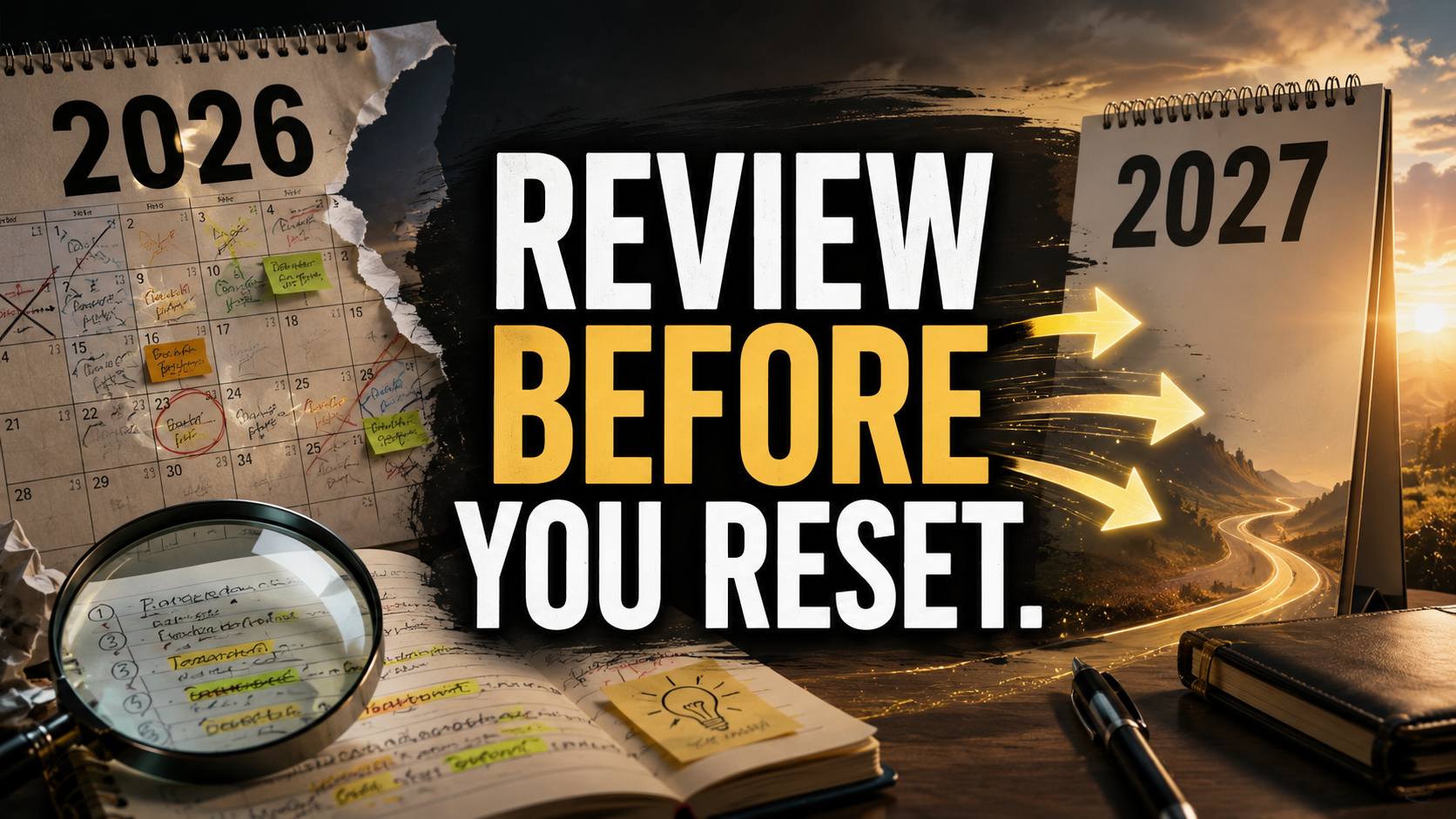
The quiet week between Christmas and New Year’s is one of the most valuable reflection windows of the year, and most contractors waste it relaxing instead of reviewing. Use it to extract maximum learning from 2026 with a structured review: analyze your financial metrics, document your operational lessons, honestly assess your team, and evaluate yourself as a leader. Then answer the one question that matters most, what actually needs to change in 2027 versus what just needs to be maintained. Reflect first, then plan a much smarter next year.
That’s the whole idea. Let me open it up, because a year of experience only becomes a year of learning if you actually stop and reflect on it.
The Wasted Quiet Week
Let me point at a strange, valuable window that most contractors sleep right through.
The stretch between Christmas and New Year’s is a quiet one. Business slows way down, the year is winding to a close, and there’s a natural lull where the usual daily chaos eases up. And most contractors spend that week relaxing, coasting, and waiting for January to kick things back into gear. Now, taking some genuine rest is fine and healthy, you’ve earned it. But here’s what most contractors miss: that quiet week is also one of the most valuable reflection windows of the entire year. It’s a rare, natural pause where you finally have the space to look back at the year you just lived and pull the lessons out of it before you dive headfirst into the next one.
And most contractors waste that opportunity completely. They coast through the quiet week without ever reflecting, and then they rush straight into the new year having learned nothing from the old one. They lived a whole year of experience, wins and losses and lessons, and they let it all slide by without extracting a single deliberate lesson from it. So they start the new year no wiser than they started the last one, primed to repeat the same mistakes and miss the same opportunities, because they never stopped to learn.
That’s a huge waste, because the year you just lived is absolutely packed with valuable lessons, if you actually stop and mine them. The quiet week is your chance to do exactly that, to run a real year-in-review that turns a year of experience into genuine learning you can use. Let me explain why this reflection matters so much, and then give you the framework to do it right.
Experience Isn’t Learning Until You Reflect
Here’s the reframe that makes this whole thing click, and it’s an important one: experience isn’t the same as learning. You can go through an entire year of experience and learn almost nothing from it, if you never stop to reflect on it. Experience only becomes learning when you deliberately extract the lessons, and that takes reflection.
Think about it. A year happened. A lot of things went right, a lot of things went wrong, and there are lessons buried in all of it, what worked and should be repeated, what failed and should be changed, what you should do differently. But those lessons don’t extract themselves. If you just rush from one year into the next without reflecting, all that hard-won experience just washes past you, and you learn nothing, so you repeat the same patterns, the same mistakes, year after year. The experience was there, but the learning never happened, because you never stopped to do the reflecting that turns one into the other.
This is why the best operators, in any field, review deliberately. Think about how a good sports team gets better. They don’t just play the games and move on. They review the game film, studying what happened, what worked, what didn’t, so they actually learn from it and improve. The film is the reflection that turns the experience of the game into learning they can use to get better. Your year-in-review is exactly that, watching the game film of your year, deliberately, to extract the lessons and get better. Without it, you’re a team that plays game after game and never watches the tape, never learning, never improving. With it, you convert every year of experience into real learning, so you improve year over year and compound that improvement over time. That’s why reflection matters. Now here’s the framework for doing it well, across four areas.
Review Area One: Your Financial Metrics
The first area to review is your financials, because the numbers tell an honest story about how your year actually went, and they hold real lessons if you look closely.
Analyze your financial performance for the year. Look at your revenue, your profit, your margins, and your key financial metrics, and ask what they actually reveal. How did you really do financially this year? Not how it felt, but what the numbers say. Where did you make money and where did you lose it? What do the margins tell you about which work and which parts of the business were actually profitable? How did the year compare to what you’d hoped or planned? The financials cut through the emotion and the vague impressions to show you the hard reality of how the business performed, and that reality is full of lessons.
So spend real time with your numbers as part of your review. Understand your financial reality for the year, honestly, and pull the lessons from it. Maybe the numbers reveal that a part of the business you thought was profitable actually wasn’t, or that a quiet part of the business was quietly your best margin. Maybe they show a trend you need to address, or a success you should double down on. Whatever they show, the financial review grounds your whole year-in-review in reality, and it directly informs your planning and budgeting for next year, connecting to the budget work I’ve written about. Look honestly at your financial metrics, understand what really happened, and extract the lessons the numbers are telling you.
Review Area Two: Your Operational Lessons
The second area to review is your operations, documenting what you learned about how the business actually runs, so the lessons carry forward instead of getting forgotten.
Look back at your operations over the year and ask what worked and what didn’t. What ran smoothly and well? What broke down, caused problems, or created headaches? Where were you inefficient, where did things fall through the cracks, where did the same problems keep recurring? What operational lessons did the year teach you, about your systems, your processes, your capacity, your execution? The year gave you a ton of operational data, in the form of what actually happened day to day, and there are real lessons in it about how to run better next year.
And here’s a key word: document them. Don’t just think about the operational lessons and let them fade, actually write them down, capture them, so they’re not lost and so they can inform your changes for next year. A lesson you notice but don’t record often gets forgotten by the time you could act on it. So document your operational lessons from the year, what worked to keep, what broke to fix, what to change in how the business runs. This creates a real record of hard-won operational learning that directly feeds into improving your operations next year, connecting to the systems and process work I’ve written about. Review your operations honestly, extract the lessons, and write them down so they actually get used.
Review Area Three: Your Team
The third area to review is your team and your people, with an honest assessment of how they performed and what the year taught you about your people and leadership.
Look back honestly at your team over the year. How did your people perform overall? Who stepped up, grew, and excelled this year? Who struggled, and why? What did the year reveal about your team’s strengths and gaps, about who your key people are, about where you’re strong and where you’re thin? What are the people and leadership lessons from the year, about hiring, developing, managing, and retaining your team? And what does your team need going forward to perform at a higher level next year? Your people are your business, so an honest review of how they did and what they need is one of the most valuable parts of your year-in-review.
This connects to the people work I’ve written about all along, developing your team, engaging your best people, building a capable bench. The year gave you real information about all of it, in how your people actually performed, and reviewing it honestly reveals lessons about your team and your leadership of them. So assess your team honestly as part of your review, who excelled, who struggled, what the people lessons are, and what your team needs next year. That assessment directly informs your people decisions and development plans for the coming year, and it’s some of the most important learning you’ll extract.
Review Area Four: Honest Self-Evaluation
The fourth area to review is the hardest and the most valuable: yourself. Honestly evaluate your own performance as the owner and leader, because that’s where the biggest growth comes from, and it’s the part most owners skip because it’s uncomfortable.
Turn the honest gaze on yourself. How did you do this year as the leader of your business? What did you do well that you should keep doing? Where did you fall short, drop the ball, or fail to lead the way you should have? Where were you the bottleneck, the constraint holding the business back? What do you personally need to work on and get better at next year? These are uncomfortable questions, which is exactly why most owners avoid them, coasting through their review looking at everything except themselves. But honest self-evaluation is where the biggest, most important growth comes from, because you are the single most important factor in your business, so improving yourself improves everything.
So don’t skip the hard part. Look honestly at your own performance, your strengths to build on and your weaknesses to work on, the ways you led well and the ways you held the business back. This connects to the honest self-reflection and learning-from-what-goes-wrong I’ve written about, the willingness to look squarely at your own shortcomings is what drives real improvement. It’s uncomfortable, but the owners who honestly evaluate themselves and commit to growing are the ones who lead their businesses to new levels, while the ones who review everything but themselves stay stuck. So do the honest self-evaluation, however uncomfortable, because it’s where your biggest growth lives. Be honest with yourself, and you’ll find the most valuable lessons of all.
The Real Output: Change Versus Maintain
Here’s what all this review is actually for, the one crucial question the whole year-in-review exists to answer: what actually needs to change in 2027, versus what just needs to be maintained? Separating those two things is the gold your review produces.
Here’s why this matters. As you review your year across financials, operations, team, and yourself, you’ll find two kinds of things. Some things worked well and should be kept, protected, and maintained, they’re not broken, so don’t fix them. And some things didn’t work and need to change, they’re the sources of your problems and your missed potential. The whole value of the review is telling these two apart clearly, so you go into next year deliberately changing what genuinely needs changing while maintaining what’s genuinely working. That clarity protects you from the two failure modes: changing everything, which creates needless chaos and throws out what was working, or changing nothing, which leaves you stuck repeating the same problems. The review reveals exactly what to change and what to keep, so you can do both deliberately.
So as you go through your review, sort your findings into those two buckets: change and maintain. What worked that you’ll protect and keep doing. What didn’t work that you’ll deliberately change. That change-versus-maintain clarity is the practical output of your whole year-in-review, and it’s what makes the reflection actionable. You emerge from the review knowing, specifically, what to keep and what to change heading into next year, which is exactly the input you need for smart planning. Sort everything into change or maintain, and your review turns into a clear roadmap for a better next year.
Reflect First, Then Plan
One final point that ties this to everything else: your year-in-review is the reflection that should come before your planning for next year. Review first, then plan, because you can’t plan a great next year without first learning from the last one.
I’ve written about planning your next year, setting your goals, building your budget from those goals. Your year-in-review is the essential step that comes before all of that, because the lessons you extract from reviewing the past year are exactly what should inform your goals and plans for the next one. The financial reality you uncovered, the operational lessons you documented, the team assessment you made, the honest self-evaluation you did, and the change-versus-maintain clarity you reached, all of it feeds directly into planning a smarter next year. Without the review, you plan next year blind, based on vague impressions and repeating old patterns. With it, you plan next year informed by real, extracted lessons, so your plan is far smarter and more targeted.
So sequence it right. Use the quiet reflection window to run your year-in-review and extract the lessons from the year you just lived. Then take those lessons into your planning for next year. Review, then plan. That sequence, reflection feeding into planning, is what turns a year of experience into a genuinely better next year, rather than just rolling from one year into the next unchanged. Do the review first, and everything you plan afterward is smarter for it.
How to Roll This Out This Holiday Week
Since this is built for the quiet week, use that reflection window deliberately.
Step one: claim the reflection window. Instead of coasting entirely through the quiet week between Christmas and New Year’s, deliberately set aside real time to reflect and review. Treat it as one of the most valuable working sessions of your year, watching the game film of 2026 to extract its lessons before you dive into 2027.
Step two: review all four areas honestly. Work through the framework: analyze your financial metrics to understand your real financial reality, document your operational lessons, honestly assess your team and people, and do the honest self-evaluation of your own performance, especially the uncomfortable part. Be honest throughout, because the review is only valuable if it’s honest.
Step three: sort everything into change versus maintain. As you review, sort your findings into two clear buckets, what worked that you’ll protect and maintain, and what didn’t work that you’ll deliberately change. This change-versus-maintain clarity is the practical roadmap your review produces for a better next year.
Step four: feed the lessons into your planning. Take everything you learned and the change-versus-maintain clarity you reached, and use it to inform your goals, budget, and plans for next year. Review first, then plan, so your planning is grounded in real, extracted lessons rather than vague impressions.
Use the quiet week that way, and you turn a wasted stretch of coasting into the reflection that converts a year of experience into real learning, so you start the new year wiser, sharper, and clear on exactly what to change and what to keep.
Frequently Asked Questions
Why should I do a year-in-review instead of just relaxing over the holidays? Some rest is fine, but the quiet week between Christmas and New Year’s is one of the most valuable reflection windows of the year, a rare pause to extract the lessons from the year before diving into the next. Most contractors waste it coasting, then start the new year having learned nothing from the last. The year you just lived is packed with lessons, but only if you stop and mine them.
Why isn’t a year of experience enough to learn from? Because experience isn’t the same as learning. You can go through a whole year and learn almost nothing if you never reflect on it, since the lessons don’t extract themselves. Experience only becomes learning when you deliberately review what happened and pull the lessons out, like a sports team reviewing game film to improve. Without that reflection, you just repeat the same patterns and mistakes year after year.
What should a year-in-review cover? Four areas. Your financial metrics, to understand the honest reality of how the business performed. Your operational lessons, documented so they carry forward. Your team, honestly assessed for who excelled, who struggled, and what your people need. And an honest self-evaluation of your own performance as the leader, which is the hardest and most valuable part. Reviewing all four extracts the full range of lessons the year has to teach.
What’s the most important output of a year-in-review? Clarity on what needs to change in 2027 versus what just needs to be maintained. As you review, you’ll find things that worked and should be protected and kept, and things that didn’t and need to change. Sorting your findings into those two buckets protects you from changing everything (needless chaos) or changing nothing (staying stuck), and gives you a clear roadmap of exactly what to keep and what to change.
How does the review connect to planning next year? The review comes first and informs the planning. You can’t plan a great next year without first learning from the last one. The financial reality, operational lessons, team assessment, self-evaluation, and change-versus-maintain clarity you reach in your review are exactly what should inform your goals and budget for next year. Review first, then plan, so your planning is grounded in real extracted lessons rather than vague impressions or repeated patterns.
The Bottom Line
The quiet week between Christmas and New Year’s is one of the most valuable reflection windows of the year, and most contractors waste it coasting, then rush into the new year having learned nothing from the old one. That’s a huge miss, because a year of experience only becomes a year of learning if you stop and reflect on it, deliberately extracting the lessons like a team watching game film.
So run a real year-in-review. Analyze your financial metrics to understand your honest financial reality. Document your operational lessons so they carry forward. Assess your team honestly. And do the uncomfortable, invaluable work of honestly evaluating yourself as a leader. Then sort everything you find into two buckets, what to maintain because it’s working, and what to change because it isn’t. That change-versus-maintain clarity is the practical roadmap your review produces.
Then take those lessons into your planning for next year, because reflection feeds planning, and review comes before you plan. Don’t waste the quiet week coasting. Use it to watch the film of 2026, extract every lesson, and decide exactly what to change and what to keep, so you start 2027 wiser and sharper than you started 2026. Reflect first, then plan, and turn a year of experience into a genuinely better year ahead.
If you want help turning your year’s lessons into a sharper, more deliberate plan for next year, that’s the work we do with contractors every day. Book a free strategy session and let’s make next year your best.
Josh Kelly is Co-Founder of Clover Growth Partners, where he helps home service contractors build businesses that grow without depending on them being in every truck.