
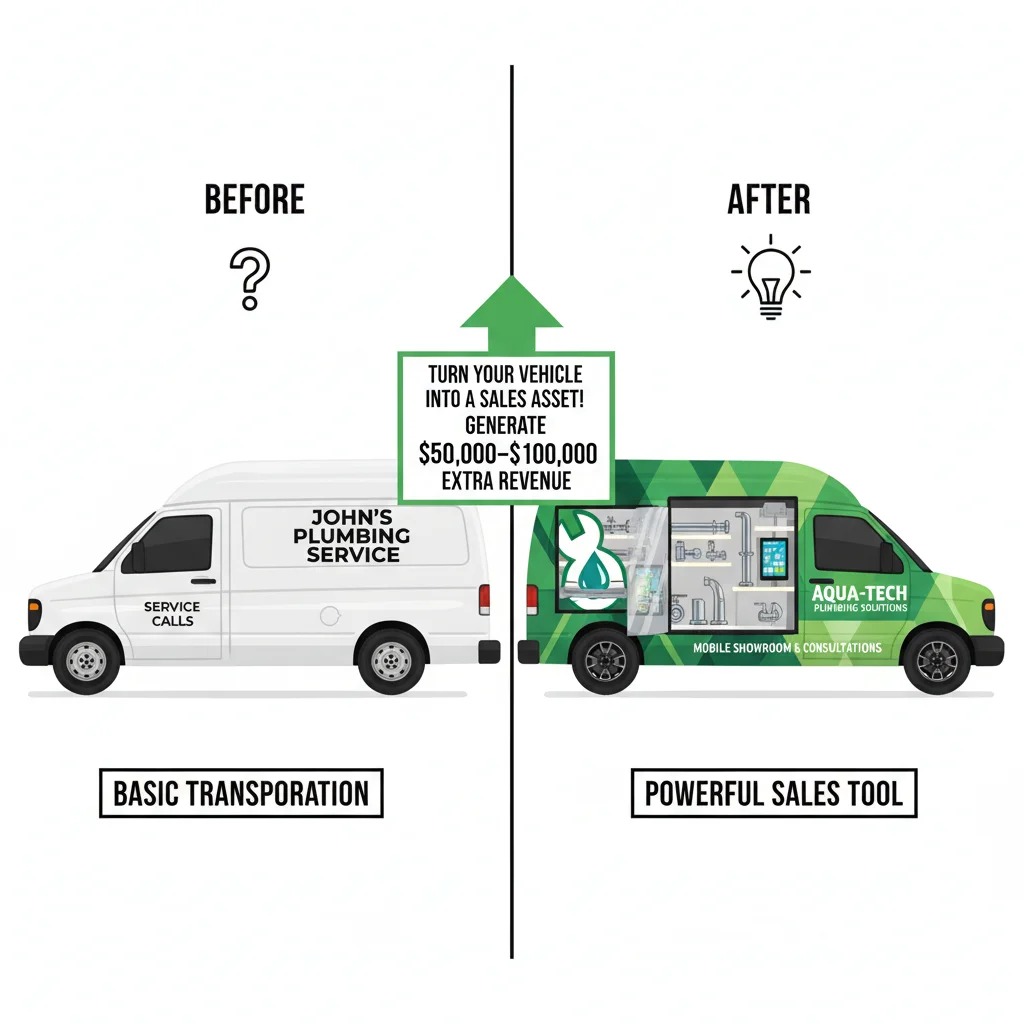
Here’s something that’s going to blow your mind: Your service vehicle is probably your most powerful marketing tool, and you’re completely wasting it.
Think about it. Your truck or van is a 4,000-pound billboard that drives directly to your customers’ homes, parks in their driveways, and sits there for hours while you work. It’s the first thing potential customers see, and it’s often what neighbors notice when they’re trying to decide who to call for their own service needs.
Yet most contractors treat their vehicles like expensive tool storage units with some basic company lettering slapped on the side.
Meanwhile, smart contractors are turning their service vehicles into mobile showrooms that generate leads, build credibility, and increase sales on every single call.
The difference between a basic service truck and a mobile sales machine? About $50,000-$100,000 per year in additional revenue.
Here’s the thing that drives me crazy: Everything you need to transform your vehicles into profit centers is available right now. You don’t need to buy new trucks or invest in expensive equipment. You just need to think strategically about how your vehicle presents your business and supports your sales process.
The Hidden Revenue Sitting in Your Driveway
Let me paint you a picture of the opportunity you’re missing.
The Visibility Math: Your service vehicle is seen by an average of 500-1,000 people per day while driving and parked at job sites. That’s 125,000-250,000 brand impressions per truck per year.
Compare that to a $10,000 annual Yellow Pages ad (remember those?) that might generate 50,000 impressions. Your truck delivers 2-5 times more visibility for a fraction of the ongoing cost.
The Credibility Factor: When customers see a professional, well-branded vehicle in their driveway, it immediately signals competence and success. Studies show that customers are willing to pay 15-20% more for services from contractors with professional-looking vehicles.
The Neighborhood Effect: Every job site becomes a marketing opportunity. Neighbors see your truck, remember your name, and call when they need service. One well-executed mobile showroom strategy can generate 2-5 additional leads per job from neighbor visibility alone.
The Sales Support Impact: A properly equipped mobile showroom supports your sales process by allowing you to demonstrate products, show before/after photos, and present professional proposals right at the customer’s location.
The Psychology of Professional Presentation
Before we dive into specific strategies, let’s talk about what’s happening psychologically when customers see your vehicle.
First Impression Formation: Customers form impressions about your business within 7 seconds of seeing your vehicle. A clean, professional, well-organized truck suggests competence, reliability, and attention to detail. A dirty, cluttered, or poorly maintained vehicle suggests the opposite.
Credibility Transfer: Customers assume your work quality matches your vehicle presentation. If your truck looks professional and organized, they expect professional, organized service. If it looks chaotic or unprofessional, they worry about the quality of your work.
Value Perception: Professional vehicle presentation allows you to charge premium prices. Customers are willing to pay more for services from contractors who appear successful and established.
Trust Building: A well-branded, professional vehicle builds trust before you even introduce yourself. This trust foundation makes sales conversations easier and more successful.
The Five-Element Mobile Showroom System
Here’s how to systematically transform your service vehicles into sales-generating machines:
Element 1: Strategic Vehicle Branding and Design
Most contractors think vehicle branding means putting their company name and phone number on the side of the truck. That’s not branding—that’s basic identification.
Professional Branding Elements:
Visual Identity System:
- Logo Design: Professional, readable logo that works at highway speeds
- Color Scheme: Colors that stand out while maintaining professional appearance
- Typography: Clean, readable fonts that project competence and reliability
- Layout Design: Organized, balanced layout that doesn’t look cluttered
Strategic Messaging: Instead of just company name and phone number, include strategic marketing messages:
- Years in Business: “Serving [Your Area] Since [Year]”
- Licensing/Certification: “Licensed • Bonded • Insured”
- Specialization: “24-Hour Emergency Service” or “[Your Specialty] Specialists”
- Value Proposition: “Same-Day Service” or “100% Satisfaction Guaranteed”
Contact Information Optimization:
- Phone Number: Large, readable from 50+ feet away
- Website URL: Easy to remember and type
- Service Areas: List specific cities or regions you serve
- Social Media: Include relevant social media handles
Advanced Branding Strategies:
Lifestyle Branding: Instead of just listing services, show the lifestyle benefits:
- Before/After Photos: Actual customer results
- Customer Testimonials: “5-Star Service” with review quotes
- Problem-Solution Messaging: “Emergency Repairs • Planned Maintenance • Comfort Solutions”
Local Market Integration: Connect your branding to local identity:
- Geographic References: Mountain, Valley, Metro, Coastal
- Local Landmarks: “Proudly Serving [Local Area] Since [Year]”
- Community Connection: “Locally Owned & Operated”
Element 2: Interior Organization and Presentation
The inside of your truck is as important as the outside. When customers see inside your vehicle, they’re evaluating your professionalism and competence.
Professional Storage Systems:
Organized Tool Storage:
- Custom Shelving: Every tool and part has a designated place
- Labeled Storage: Clear labeling system for easy inventory management
- Clean Organization: Everything organized and easily accessible
- Professional Appearance: Storage that looks intentional, not chaotic
Mobile Office Setup:
- Tablet/Laptop Station: Secure mounting for technology and paperwork
- Invoice Processing Area: Professional space for billing and payments
- Proposal Presentation Setup: Clean area for showing estimates and contracts
- Customer Communication Station: Organized space for customer interactions
Inventory Display System:
Product Showcasing: Display key products and components where customers can see them:
- Sample Installation: Show high-quality parts and materials
- Brand Display: Feature preferred manufacturers and quality brands
- Technology Integration: Display smart home or high-efficiency options
- Comparison Materials: Show different quality levels and options
Educational Materials:
- Maintenance Guides: Helpful information customers can take with them
- Product Brochures: Professional materials about services and products
- Before/After Portfolio: Photos of successful projects
- Certification Display: Professional credentials and training certificates
Element 3: Technology Integration and Efficiency
Modern customers expect modern technology. Your mobile showroom should demonstrate technological competence and efficiency.
Customer-Facing Technology:
Digital Presentation Tools:
- Tablet Presentations: Professional service presentations and proposals
- Photo Documentation: Before, during, and after photos for transparency
- Digital Contracts: Electronic signature capability for immediate service authorization
- Payment Processing: Professional payment options including digital payments
Communication Technology:
- Real-Time Updates: GPS tracking and arrival notifications for customers
- Instant Communication: Text and email updates about service progress
- Online Scheduling: Easy booking and rescheduling capabilities
- Review Collection: Systematic customer feedback collection
Diagnostic and Service Technology:
Professional Equipment Display:
- Advanced Diagnostic Tools: Modern equipment that demonstrates expertise
- Efficiency Tools: Technology that speeds service and improves accuracy
- Quality Assurance: Equipment that ensures consistent, high-quality results
- Safety Equipment: Professional safety gear that builds confidence
- Instant Estimates: Technology-assisted accurate pricing
- Historical Analysis: Access to customer service history and patterns
- Predictive Maintenance: Identify potential problems before they become emergencies
- Optimization Recommendations: Data-driven service and upgrade recommendations
Element 4: Sales Support and Presentation Systems
Your mobile showroom should actively support your sales process by making it easy to present options, demonstrate value, and close sales on-site.
Proposal and Estimate Systems:
Professional Presentation Materials:
- Digital Portfolio: High-quality photos of completed projects
- Proposal Templates: Professional, branded estimate and proposal formats
- Financing Options: Information about payment plans and financing
- Warranty Information: Clear explanation of guarantees and service commitments
Demonstration Capabilities:
- Product Samples: Actual components customers can touch and examine
- Cutaway Models: Educational displays that show how systems work
- Efficiency Demonstrations: Tools to show energy savings or performance improvements
- Quality Comparisons: Side-by-side comparisons of different quality levels
Decision-Making Support:
Urgency Creation Tools:
- Diagnostic Results: Clear documentation of problems and recommendations
- Cost Analysis: Professional analysis of repair vs. replacement decisions
- Seasonal Considerations: Information about optimal timing for service
- Emergency Service Capabilities: Availability and response time information
Value Demonstration:
- ROI Calculators: Show financial benefits of upgrades and improvements
- Efficiency Comparisons: Demonstrate energy savings and cost reductions
- Longevity Analysis: Show long-term value of quality installations
- Maintenance Programs: Present ongoing service value and customer lifetime benefits
Element 5: Lead Generation and Marketing Integration
Your mobile showroom should actively generate new business opportunities while supporting current customer service.
Neighborhood Marketing Strategy:
Passive Lead Generation:
- “Currently Servicing” Signs: Professional yard signs during service calls
- Vehicle Positioning: Strategic parking to maximize neighborhood visibility
- Service Door Hangers: Leave information for neighbors about services
- Completion Notifications: Signs indicating successful project completion
Active Community Engagement:
- Neighborhood Canvassing: Systematic approach to introducing services to neighbors
- Educational Workshops: Mobile demonstrations of maintenance and safety
- Community Event Participation: Use vehicles for local event marketing
- Seasonal Service Campaigns: Proactive neighborhood maintenance offerings
Digital Integration Strategy:
Social Media Content Creation:
- Job Site Photos: Document work in progress and completed projects
- Customer Testimonials: Collect and share customer feedback
- Educational Content: Create helpful content while at job sites
- Behind-the-Scenes: Show professionalism and expertise in action
- Location-Based Check-ins: Document service area coverage
- Customer Reviews: Systematic collection of online reviews
- Local Business Listings: Update service area and availability information
- Geographic Keyword Integration: Optimize for local search terms
Advanced Mobile Showroom Strategies
Once you’ve mastered the basics, here are advanced strategies for maximizing your mobile showroom impact:
The Seasonal Adaptation Strategy
Weather-Responsive Messaging:
- Spring: Maintenance and tune-up campaigns
- Summer: Emergency service and cooling efficiency
- Fall: Winterization and preparation services
- Winter: Emergency response and heating optimization
Service-Specific Configurations:
- Maintenance Seasons: Focus on preventive care and system optimization
- Emergency Periods: Emphasize quick response and problem-solving capability
- Installation Seasons: Showcase new equipment and upgrade options
- Inspection Campaigns: Feature diagnostic and assessment services
The Customer Education Mobile Classroom
Interactive Educational Displays: Transform your truck into a mobile classroom that educates customers about their systems:
System Operation Education:
- Visual Displays: Show how HVAC, plumbing, or electrical systems work
- Maintenance Demonstrations: Teach customers basic maintenance tasks
- Problem Prevention: Show common issues and prevention strategies
- Efficiency Education: Demonstrate energy and cost-saving opportunities
Technology Showcase:
- Smart Home Integration: Show connected home technology options
- Efficiency Upgrades: Demonstrate high-efficiency equipment benefits
- Safety Improvements: Educational displays about safety upgrades and codes
- Future-Proofing: Show technology trends and preparedness options
The Premium Service Experience
Luxury Service Presentation: For contractors targeting premium market segments:
Executive Service Experience:
- White Glove Service: Exceptional cleanliness and professionalism standards
- Concierge Approach: Full-service customer experience management
- Technology Integration: Latest technology for diagnosis and service
- Premium Materials: Display and use only top-tier products and components
Custom Service Packages:
- VIP Maintenance Programs: Premium ongoing service packages
- Priority Service: Guaranteed response times and priority scheduling
- Comprehensive Solutions: Full-service home comfort and safety management
- Personal Service Relationships: Dedicated technician programs
Case Studies: Mobile Showroom Success Stories
Case Study 1: Alpine Air Conditioning (Denver, CO)
Challenge: Competing with 15+ HVAC contractors in competitive Denver market, struggling to differentiate on anything other than price.
Mobile Showroom Strategy:
- Professional Branding: Complete vehicle wrap with lifestyle imagery and customer testimonials
- Interior Organization: Custom-built storage system with organized tool display and customer consultation area
- Technology Integration: Tablet-based presentations with digital contracts and payment processing
- Educational Display: Cutaway HVAC system showing efficiency differences and maintenance needs
- Seasonal Messaging: Magnetic panels for seasonal service campaigns
Implementation Details:
- Investment: $8,500 per vehicle for complete mobile showroom transformation
- Training: 40 hours of team training on presentation and sales integration
- Process Integration: Systematic use of mobile showroom capabilities on every service call
Results After 12 Months:
- Lead Generation: 35% increase in neighbor referrals from job site visibility
- Sales Conversion: 28% increase in additional service sales per call
- Premium Pricing: 22% increase in average ticket size due to professional presentation
- Customer Satisfaction: 15% improvement in customer satisfaction scores
- ROI: 340% return on mobile showroom investment in first year
Case Study 2: Precision Plumbing Solutions (Austin, TX)
Challenge: New plumbing business competing against established contractors, needed to build credibility and generate leads quickly.
Mobile Showroom Strategy:
- Credibility Building: Professional vehicle branding emphasizing licensing, insurance, and local ownership
- Service Specialization: Vehicle messaging focused on emergency response and complex problem-solving
- Educational Approach: Mobile displays showing common plumbing problems and prevention strategies
- Technology Demonstration: Modern diagnostic equipment prominently displayed and explained
- Community Integration: Vehicle designed for local event participation and neighborhood marketing
Specific Tactics:
- Diagnostic Display: Visible camera equipment for pipe inspection and problem identification
- Product Quality: Premium fixture and component samples for customer education
- Emergency Branding: Clear emergency service messaging with 24/7 availability
- Local Connection: Prominent “Austin-Owned” messaging with local landmark imagery
Results After 18 Months:
- Market Penetration: Achieved 8% market share in target service area
- Emergency Calls: 45% of new customers came from emergency service calls
- Neighborhood Generation: Average of 3.2 neighbor leads per service call
- Business Growth: Grew from startup to $1.1M annual revenue
- Premium Positioning: Average prices 18% above market due to professional presentation
ROI Analysis: The Economics of Mobile Showroom Investment
Investment Breakdown:
Basic Mobile Showroom Setup ($3,000-$5,000):
- Professional Vehicle Lettering: $800-$1,200
- Interior Organization System: $1,200-$2,000
- Basic Technology Integration: $500-$800
- Professional Materials and Displays: $500-$1,000
Advanced Mobile Showroom System ($6,000-$12,000):
- Complete Vehicle Wrap: $2,500-$4,000
- Custom Interior Buildout: $2,500-$4,500
- Advanced Technology Package: $1,000-$2,000
- Professional Display Systems: $500-$1,500
Premium Mobile Showroom Experience ($10,000-$20,000):
- Luxury Vehicle Wrapping and Branding: $4,000-$6,000
- Custom Interior Design and Buildout: $4,000-$8,000
- Advanced Technology Integration: $2,000-$4,000
- Professional Display and Education Systems: $1,000-$2,000
Revenue Impact Analysis:
Conservative Projections (Based on $2M Annual Revenue Contractor):
- Increased Closing Rate: 15% improvement = $50,000 additional annual revenue
- Premium Pricing: 10% average increase = $200,000 additional annual revenue
- Neighbor Lead Generation: 2 additional leads per month = $60,000 additional annual revenue
- Total Annual Revenue Impact: $310,000
Return on Investment:
- Basic System ROI: 6,200% to 10,300% annual return
- Advanced System ROI: 2,580% to 5,170% annual return
- Premium System ROI: 1,550% to 3,100% annual return
Even the most expensive mobile showroom system pays for itself within 3-4 months through increased sales and premium pricing capabilities.
Implementation Timeline: 60-Day Mobile Showroom Transformation
Days 1-14: Planning and Design Phase
- Week 1: Assess current vehicles and identify transformation opportunities
- Week 2: Research local vehicle wrap companies and interior customization providers
- Days 10-14: Design professional branding and messaging strategy
Days 15-30: Production and Installation Phase
- Week 3: Order vehicle branding, interior organization systems, and technology
- Week 4: Schedule installation and customization work
- Days 26-30: Complete vehicle transformation and initial setup
Days 31-45: Training and Integration Phase
- Week 5: Train team on mobile showroom presentation and sales integration
- Week 6: Practice customer presentation and technology integration
- Days 38-45: Begin systematic implementation with customer feedback collection
Days 46-60: Optimization and Measurement Phase
- Week 7: Monitor results and collect customer feedback
- Week 8: Optimize presentation and sales processes based on results
- Days 53-60: Calculate ROI and plan expansion to additional vehicles
Technology Integration: Modern Tools for Mobile Success
Essential Technology Components:
Customer Presentation Technology:
- Professional Tablets: For estimates, contracts, and educational presentations
- Portable Projectors: For larger group presentations or detailed system explanations
- Digital Signature Pads: Professional contract execution and approval
- Mobile Payment Systems: Complete payment processing capabilities
Documentation and Communication:
- High-Quality Cameras: Before, during, and after photo documentation
- Video Capability: Time-lapse documentation and educational content creation
- Communication Apps: Real-time customer updates and scheduling management
- Cloud Integration: Instant access to customer history and business systems
Diagnostic and Service Technology:
- Professional Diagnostic Equipment: Modern tools that demonstrate expertise and accuracy
- Efficiency Measurement Tools: Equipment that quantifies improvements and savings
- Safety Testing Equipment: Professional safety inspection and verification tools
- Quality Assurance Technology: Tools that ensure consistent, high-quality results
Common Mobile Showroom Mistakes and Solutions
Mistake 1: Over-Branding and Clutter Some contractors try to put too much information on their vehicles, creating cluttered, unprofessional appearance.
Solution: Focus on essential information only. Your vehicle should be readable and professional at highway speeds.
Mistake 2: Neglecting Interior Organization Focusing only on exterior branding while ignoring interior presentation and organization.
Solution: Interior organization is as important as exterior branding. Customers judge your competence based on both.
Mistake 3: Technology for Technology’s Sake Adding technology without connecting it to improved customer experience or sales results.
Solution: Every technology addition should directly improve customer experience or support sales processes.
Mistake 4: Inconsistent Branding Vehicle branding that doesn’t match other business materials and communications.
Solution: Ensure consistent branding across all business touchpoints for maximum impact and professionalism.
Mistake 5: No Sales Integration Beautiful mobile showrooms that aren’t integrated into systematic sales and customer presentation processes.
Solution: Train your team to use mobile showroom capabilities strategically in every customer interaction.
Measuring Mobile Showroom Success
Key Performance Indicators:
Lead Generation Metrics:
- Neighbor Leads per Job: Track leads generated from job site visibility
- Vehicle-Generated Inquiries: Calls specifically mentioning seeing your vehicle
- Social Media Engagement: Posts and interactions generated from vehicle visibility
- Event and Community Leads: Business generated from community participation
Sales Performance Metrics:
- Closing Rate Improvement: Increase in sales conversion rates
- Average Ticket Size: Increase in per-call revenue
- Upselling Success: Additional services sold per customer interaction
- Premium Price Acceptance: Customer willingness to pay higher prices
Customer Experience Metrics:
- Customer Satisfaction Scores: Improvement in customer feedback ratings
- Professional Perception: Customer comments about business professionalism
- Trust and Credibility: Faster relationship building and trust establishment
- Referral Generation: Increase in customer referrals and word-of-mouth marketing
Business Impact Metrics:
- Revenue Growth: Direct revenue increase attributable to mobile showroom
- Market Share Growth: Increased competitiveness and market penetration
- Brand Recognition: Improved local brand awareness and recognition
- Competitive Advantage: Differentiation from competitors in presentation and professionalism
Seasonal Strategies and Campaign Integration
Seasonal Mobile Showroom Adaptations:
Spring Campaigns:
- Maintenance Focus: Branding emphasizing seasonal tune-ups and system preparation
- Fresh Start Messaging: New installations and upgrade campaigns
- Safety Inspections: Seasonal safety check and preparation services
- Efficiency Optimization: Energy efficiency and cost reduction focus
Summer Campaigns:
- Emergency Response: 24/7 availability and rapid response capabilities
- Comfort Solutions: Cooling efficiency and comfort improvement focus
- Peak Performance: System optimization for high-demand seasons
- Preventive Care: Maintenance to prevent emergency breakdowns
Fall Campaigns:
- Winterization: Seasonal preparation and system protection
- Efficiency Upgrades: Equipment replacement before peak usage seasons
- Maintenance Programs: Annual service agreement enrollment campaigns
- Safety Preparation: Safety system checks and emergency preparedness
Winter Campaigns:
- Emergency Services: Rapid response for heating and emergency issues
- Comfort Solutions: Heating efficiency and indoor air quality focus
- Planning Services: Planning and preparation for spring projects
- Maintenance Education: Customer education about winter maintenance needs
Ready to Transform Your Vehicles Into Sales Machines?
Look, here’s the bottom line: Your service vehicle is either helping you win business or it’s making you invisible in a competitive market.
Every day you drive around in a basic, poorly branded truck is another day you’re missing opportunities to generate leads, build credibility, and increase your sales.
The contractors who dominate their local markets understand that professional presentation matters at every customer touchpoint—and your service vehicle is often the first and most lasting impression you make.
The mobile showroom strategy isn’t about spending money on fancy truck wraps. It’s about strategically leveraging your biggest marketing asset to generate more leads, close more sales, and charge premium prices for your services.
Ready to turn your service vehicles into profit centers?
Let’s talk about creating a mobile showroom strategy that transforms your trucks from tool storage into sales-generating machines.
Because every mile you drive should be working to build your business, not just get you to the next job.