
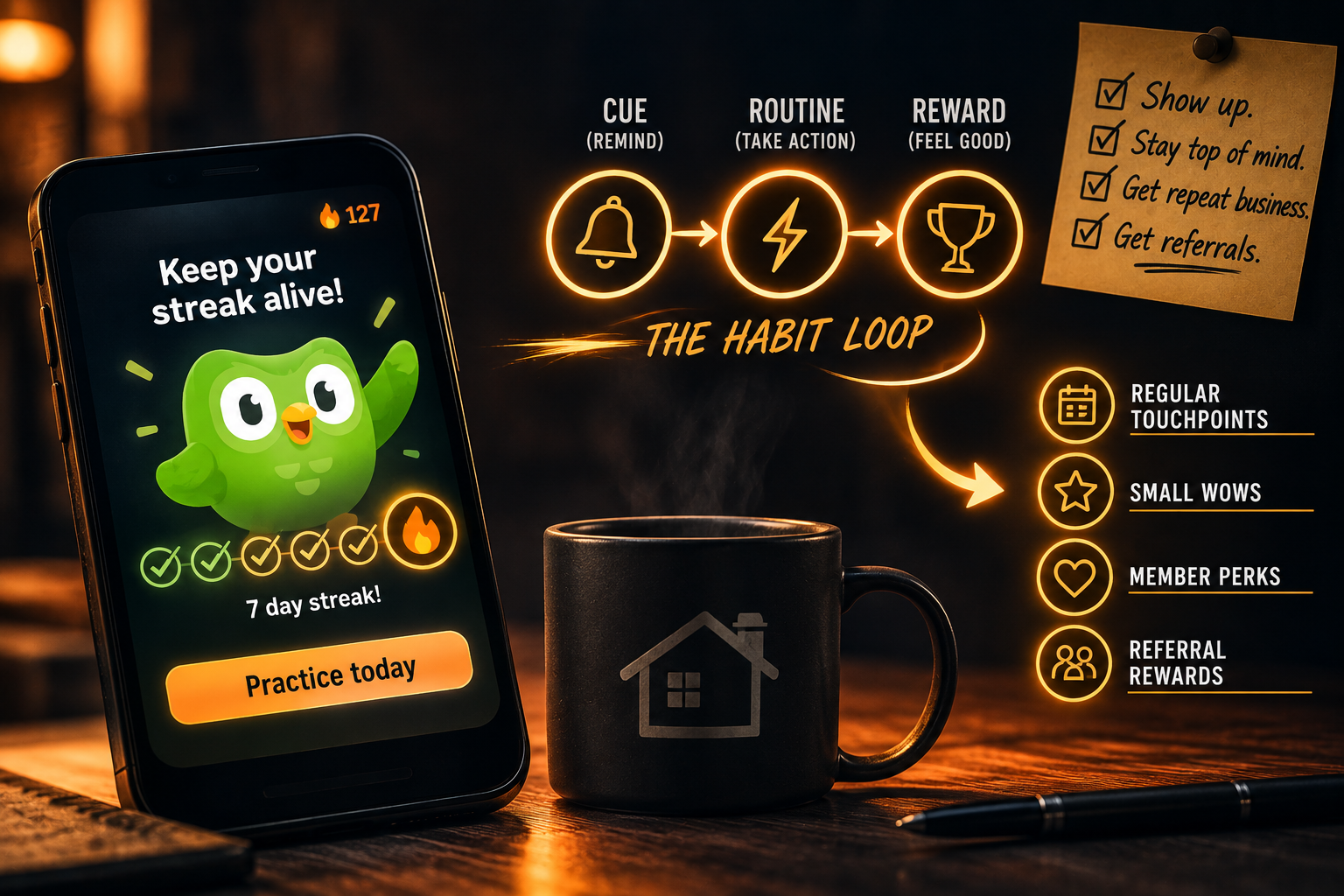
Duolingo turned something people usually quit, learning a language, into a daily habit millions of people can’t break, by engineering the psychology of habit formation into every part of the experience. Contractors can steal that same behavioral science to turn a forgettable, once-in-a-while service into a habitual, top-of-mind relationship. Use cues, consistent small touches, rewards, and the power of streaks, and you become the automatic choice customers stay with, come back to, and refer.
That’s the whole idea. Let me open it up, because the science of habit is the science of keeping customers, and most contractors have never thought about it this way.
The Problem: You’re Forgettable by Default
Let’s start with the hard truth about the home service business, because you have to understand the problem before the Duolingo lesson makes sense.
Your service is low-frequency. Customers only think about you when something breaks. Their heat goes out, their drain clogs, their roof leaks, and suddenly they need you. The rest of the time, which is almost all of the time, you are completely off their radar. Nobody wakes up thinking about their HVAC company. There’s no natural habit around what you do. And that creates a real problem: because you’re out of mind ninety-nine percent of the time, when something finally does break, there’s a good chance they’ve forgotten your name and just search for whoever comes up first, or call whoever their neighbor mentioned. All that good work you did last time, forgotten, because too much time passed with zero contact.
This is the opposite of a habit. A habit is something automatic, something top of mind, something people do without thinking. And you, by default, are the furthest thing from a habit. You’re a name they have to dig up from memory in a stressful moment, if they can remember it at all. That forgettability is quietly costing you repeat business and referrals constantly, and most contractors just accept it as the nature of the trade.
Now here’s the opportunity. What if you could engineer your way out of forgettable? What if you could build enough of a habit, enough top-of-mind presence and positive connection, that when something breaks, calling you is the automatic reflex, and in between, customers actually stay engaged with you instead of forgetting you exist? That’s exactly what Duolingo figured out how to do with something even harder to build a habit around than home service. Let me show you how they did it.
How Duolingo Cracked Habit Formation
Think about how hard Duolingo’s challenge was. They wanted to get regular people to practice a language every single day, voluntarily, for fun. Learning a language is something the vast majority of people start and quit. It’s hard, it’s slow, and life gets in the way. And yet Duolingo built one of the most engaging apps in history, with millions of people who practice daily and feel genuinely bad when they miss a day. They didn’t do that by accident. They engineered it using the science of how habits actually form. Here are the pieces they nailed, and every one of them maps onto your business.
The habit loop: cue, action, reward. At the core of every habit is a simple loop. A cue triggers the behavior, you do the action, and you get a reward that makes you want to do it again. Duolingo built this loop obsessively. The daily reminder is the cue. The quick lesson is the action. The points, the celebration, the progress are the reward. Around and around, until it’s automatic. Understand this loop, because it’s the blueprint for building a habit around anything, including a relationship with your company.
Consistency over intensity. Duolingo didn’t ask people to study for three hours once a month. They asked for a few minutes every day. Small, consistent, repeated action, because that’s how habits actually form, through frequency, not intensity. Little and often beats big and rare, every time, when you’re building a habit.
Streaks and loss aversion. This is Duolingo’s secret weapon. The streak. You practice ten days in a row and you’ve got a ten-day streak, and now you really, really don’t want to break it. Why? Because of loss aversion, one of the most powerful forces in human psychology. People hate losing something they’ve built up far more than they enjoy gaining something new. Once you’ve got a streak going, breaking it feels like a real loss, so you keep going just to protect it. That single mechanic keeps millions of people engaged.
Rewards and gamification. Duolingo makes the whole thing feel rewarding and even fun. Points, levels, celebrations, little wins along the way. They turned a chore into something that gives you a hit of satisfaction, so you want to come back. Rewarding the behavior makes the behavior stick.
Make it easy. And underneath all of it, they made it effortless. Bite-sized lessons, dead-simple to start, no friction. Because the harder something is to do, the less likely it becomes a habit. They removed every barrier between the person and the action.
Cue, consistency, streaks, rewards, and ease. That’s the recipe that turned language learning into a habit millions can’t quit. Now let me translate every piece into keeping your customers.
Becoming the Cue
The first piece is the cue, and this is where you attack your forgettability problem head-on.
Remember, your problem is that customers forget you between the rare times they need you. So you become the cue. You engineer regular reminders that prompt the customer to think about you and take action, so you’re not relying on their memory in a crisis. This is the maintenance reminder, the seasonal check-in, the “time to get your system ready” message. Every one of those is a cue that pulls you back to the top of their mind and prompts them to act, on your schedule instead of only when disaster strikes.
Think about what that does. Instead of waiting, forgotten, for something to break, you’re regularly showing up as the friendly reminder that it’s time to take care of their home. You become the trigger, the same way Duolingo’s daily notification is the trigger. And when you’re consistently the one reminding them, you’re the one they think of and call, because you built the cue instead of hoping they’d remember you cold. This is the foundation of the whole habit, being the cue rather than waiting to be remembered.
Consistency: The Regular Small Touch
The second piece is consistency, and it’s the engine that makes everything else work.
Duolingo’s magic wasn’t one big thing, it was the small daily action, repeated. Your version is a regular rhythm of small, valuable touches with your customers, spread across the year, the same communication cadence I’ve been preaching all along. Not a big annual blast, but frequent, bite-sized, genuinely useful contact. A seasonal tip. A helpful reminder. A quick check-in. A piece of value that takes them ten seconds to appreciate. Little and often.
Why does this work? Because habits and relationships both form through consistent, repeated contact, not through occasional intensity. A customer who hears something small and useful from you regularly stays connected to you, keeps you top of mind, and builds a low-grade habit of thinking of you as their company. A customer who hears from you once a year, or only when you want to sell them something, forgets you between contacts. Consistency is what turns you from a name they once used into a habit they don’t think twice about. This is the gym principle applied to customer relationships. It’s not the one big workout, it’s showing up with a small, valuable touch, over and over, until the relationship is just automatic.
Rewards: Give Them a Reason to Stay Engaged
The third piece is rewards, because the habit loop needs a payoff to keep spinning.
Duolingo rewards you constantly for engaging, points, celebrations, little wins, so you feel good and want to come back. You can build the same into your customer relationship with a loyalty and rewards element. Give customers a reason to feel good about staying engaged with you and continuing to choose you. This could be a loyalty program where continued business earns them something. Member perks that make being your customer feel rewarding. Recognition and appreciation that gives them a positive feeling every time they interact with you. Little wins and thank-yous along the way.
The point is to make engaging with your company and staying loyal to it feel rewarding, not just transactional. When a customer gets a genuine payoff, real value, real perks, real appreciation, for staying with you, you’ve closed the habit loop. The cue brings them back, the action is choosing you, and the reward makes them want to do it again. Reward loyalty and engagement, and you make staying with you the satisfying, easy choice, exactly the way Duolingo makes practicing feel like a win instead of a chore.
Streaks: The Most Powerful Tool You’re Not Using
The fourth piece is the streak, and this is Duolingo’s most powerful mechanic, built on loss aversion, and almost no contractor uses it. This is where you can get a real edge.
Remember why streaks work: people hate losing something they’ve built up. Once a customer has accumulated something with you, they don’t want to lose it, and that keeps them loyal. So build things customers accumulate and won’t want to give up. Membership tenure is a streak, “you’ve been a valued member for three years,” and recognizing that milestone makes them not want to break it. Loyalty status that builds over time is a streak, the longer they stay, the more status or benefits they’ve earned, and dropping you means losing all of it. Anniversary recognition, milestone rewards for years of loyalty, accumulated benefits that grow with tenure, all of these create the same loss aversion that keeps Duolingo users on their streaks.
Think about how this changes the cancellation decision. A customer deciding whether to leave isn’t just weighing this month’s service anymore. They’re weighing giving up three years of accumulated loyalty, status, and benefits they’ve built up. That’s a much harder thing to walk away from, exactly like breaking a long streak feels bad enough that you keep it going. Build something your customers accumulate and value, then recognize and reward it, and you’ve given them a powerful reason to stay that has nothing to do with your competitors’ prices. Loss aversion is one of the strongest forces in human behavior, and almost nobody in the trades is using it. Use it.
Make It Easy, and Don’t Be the Annoying Owl
Two final pieces, and one important warning.
Make it easy. Duolingo removed all the friction. You do the same by making it effortless to do business with you and stay engaged. Easy scheduling, simple rebooking, a smooth experience at every turn, tying right back to the friction-free philosophy I’ve written about. The easier you make staying engaged with you, the more it becomes a habit. Friction kills habits, so remove it wherever you can.
And here’s the warning, because there’s a dark side to all of this. Duolingo’s reminder mascot became a bit of an internet joke for being pushy and guilt-trippy about your missed lessons. That’s the line you cannot cross. All of this habit-building only works if it’s genuinely valuable and welcome, not annoying and spammy. If your cues become nagging, if your touches become constant sales pitches, if your rewards feel manipulative, you don’t build a habit, you build resentment, and customers tune you out or block you. So build every piece of this on real value and genuine care, the same honesty I’ve preached all along. Be the helpful, welcome presence in their life, not the pushy owl they want to mute. Habits built on real value last. Habits built on nagging get deleted.
How to Roll This Out Starting Monday
Same rhythm as always. One piece at a time.
Week one: become the cue. Set up regular, automated reminders, seasonal and maintenance, so you’re consistently prompting customers instead of waiting to be remembered. Attack your forgettability problem first by becoming the trigger that brings them back to you.
Week two: build the consistent small-touch rhythm. Create a cadence of frequent, bite-sized, genuinely valuable touches across the year, tips, reminders, check-ins. Little and often, to keep you top of mind and build the habit of thinking of you as their company. Consistency over intensity.
Week three: add rewards and a streak. Build a loyalty or rewards element that makes staying engaged feel good, and create something customers accumulate over time, tenure, status, milestone benefits, that they won’t want to lose. Close the habit loop with a payoff, and use loss aversion to make staying easy.
Week four: remove friction and check your tone. Make doing business with you effortless at every step, and audit all your communication to make sure it’s genuinely valuable and welcome, never nagging or spammy. Be the helpful presence, not the pushy owl. Real value is what makes the habit stick.
Four weeks to start turning a forgettable, once-in-a-while service into a habitual, top-of-mind relationship. Do it right, and you become the automatic choice, the reflex customers reach for, the company they stay loyal to for years without thinking twice.
Frequently Asked Questions
How can habit formation help a home service business? Home service is low-frequency, so customers forget you between the rare times they need you, and often call whoever they find first when something breaks. Habit formation fixes that by engineering regular positive touchpoints that keep you top of mind, so calling you becomes the automatic reflex. It turns a forgettable service into a habitual relationship that drives repeat business, retention, and referrals.
What is the habit loop and how does it apply to customers? The habit loop is cue, action, reward. A cue triggers a behavior, you do it, and a reward makes you want to repeat it. For contractors, you become the cue through regular reminders, the action is the customer choosing and engaging with you, and the reward is real value, perks, and appreciation. Build that loop and choosing you becomes an automatic, satisfying habit.
What’s the most underused customer retention tactic from apps like Duolingo? Streaks, built on loss aversion. People hate losing something they’ve built up, so once a customer accumulates loyalty tenure, status, or milestone benefits with you, walking away means losing all of it, which keeps them loyal. Almost no contractor uses this. Build things customers accumulate and value over time, recognize the milestones, and you give them a powerful reason to stay.
How often should I communicate with customers to build a habit? Frequently and in small doses, not with big rare blasts. Habits form through consistency, not intensity, so a rhythm of regular, bite-sized, genuinely valuable touches across the year works far better than an annual push. Little and often keeps you top of mind and builds the habit of thinking of you as their company, the same way a few minutes daily builds a language habit.
How do I keep habit-building communication from becoming annoying? Build every touch on genuine value and real care, never nagging or constant sales pitches. Duolingo’s reminder mascot became a joke for being pushy, and that’s the line you can’t cross. If your cues nag and your touches only sell, you build resentment and get muted. Be the helpful, welcome presence in the customer’s life, and the habit will stick instead of getting deleted.
The Bottom Line
Your business is forgettable by default, because customers only need you once in a while and forget you the rest of the time. That forgettability quietly costs you repeat business and referrals every single day. Duolingo faced an even harder version of that problem and solved it by engineering the science of habit into everything they do.
Steal the recipe. Become the cue that brings customers back instead of waiting to be remembered. Build a consistent rhythm of small, valuable touches. Reward loyalty so staying feels good. Use streaks and accumulated benefits so leaving feels like a loss. Make it all effortless. And build every bit of it on genuine value, so you’re the welcome habit, not the annoying one.
Do that, and you stop being a name customers have to dig up in a crisis and become the automatic reflex, the company they stay with, come back to, and send their friends to, year after year. That’s the Duolingo effect, and it works just as well on a service call as it does on a language lesson. The habit you build today is the repeat business and referrals you collect for years, and it costs a fraction of what you spend chasing strangers who forgot you existed.
If you want help building the customer engagement and loyalty systems that turn one-time jobs into lifelong relationships, that’s the work we do with contractors every day. Book a free strategy session and let’s build your customer habit.
Josh Kelly is Co-Founder of Clover Growth Partners, where he helps home service contractors build businesses that grow without depending on them being in every truck.