

Do you feel like your employees don’t help each other? Are you tired of fixing the same problems ofver and over? You’re not alone.
Most home service business owners struggle with teamwork. But there’s a simple way to fix this. Steve Jobs figured it out when he was just a kid. And it can work for your plumbing, HVAC, electrical, roofing, garage door, solar, or flooring business too.
By the end of this post, you’ll know exactly how to turn your average employees into a team that makes each other better every single day.

The Rock Story That Changed Everything
When Steve Jobs was young, his neighbor showed him something in his garage. It was a rock tumbler—just a coffee can with a motor.
They put rough, ugly rocks inside. Added water and some grit powder. Turned it on and let it run all night.
The next morning, those same rocks were shiny and beautiful.
Jobs never forgot this. He said it taught him how great teams work. The rocks bumped into each other all night. They made noise. They created friction. But that friction made them better.
“That’s my idea of a great team,” Jobs said. “People who bump into each other and polish each other up.”
This isn’t just a nice story. It’s how the best teams in every industry work. Including yours.
Why Your Team Needs This Right Now
In your business, different people need to work together:
- Your best tech and your new hire
- Your office staff and your field crew
- Your sales team and your installers
- Your experienced workers and your apprentices
When they work together right, amazing things happen. When they don’t, you get:
- Missed appointments
- Angry customers
- Good employees quitting
- The same mistakes over and over
- You working 60+ hours a week
Most business owners think good teams never disagree. That’s wrong. The best teams challenge each other. They make each other better through what I call “good friction.”
The Simple 3-Step Plan
Step 1: Find Your Rough Rocks (Identify What Needs Polish)
Every person on your team has rough spots. That’s normal. Look for:
New Employees:
- Know their trade but can’t talk to customers
- Good at work but don’t understand your system
- Skilled but need to learn your way of doing things
Experienced Team Members:
- Great at their job but hate new technology
- Know everything but don’t like teaching others
- Set in their ways and resist change
Office Staff:
- Know the system but panic with upset customers
- Good with paperwork but don’t understand field work
- Handle routine well but struggle with problems
Don’t see these as problems. See them as chances to get better. Every rough rock can become a shiny one.
Step 2: Create Good Friction (Start the Tumbling Process)
This is where most owners mess up. They think teams should never disagree or have conflict. Wrong.
Good friction looks like this:
Weekly Team Meetings (15 minutes max):
- What went well last week?
- What problems did we face?
- How can we do better?
Cross-Training Sessions:
- Your best customer service person teaches technicians how to handle difficult customers
- Your fastest solar installer shows others time-saving panel placement tricks
- Your most organized flooring crew leader shares their measurement system
- Your experienced roofer teaches safety protocols to new team members
Problem-Solving Sessions:
- When something goes wrong, bring the team together
- Ask “How can we prevent this next time?”
- Let everyone suggest solutions
Peer Reviews:
- Have team members check each other’s work
- Not to find fault, but to share knowledge
- Create a culture where helping each other is normal
The key: Focus on work, not people. Fix problems, don’t blame people.
Step 3: Watch the Magic Happen (See the Results)
When you do this right, average employees become great team members. They start:
- Helping each other without being asked
- Fixing problems before they get big
- Taking pride in team wins, not just personal wins
- Teaching new people without complaining
- Coming up with better ways to do things
- Staying at your company longer
How to Start Your Rock Tumbler
Make It Safe to Speak Up
Before people will help each other, they need to feel safe. This means:
Thank people who bring up problems. They’re helping everyone, not causing trouble.
When someone makes a mistake, ask “How can we prevent this next time?” instead of “Who messed up?”
Show that you make mistakes too. Share a story about something you learned the hard way.
Protect people who are learning. Don’t let experienced team members pick on new employees.
Create Regular Friction Points
Don’t wait for teamwork to happen by accident. Build it into your schedule:
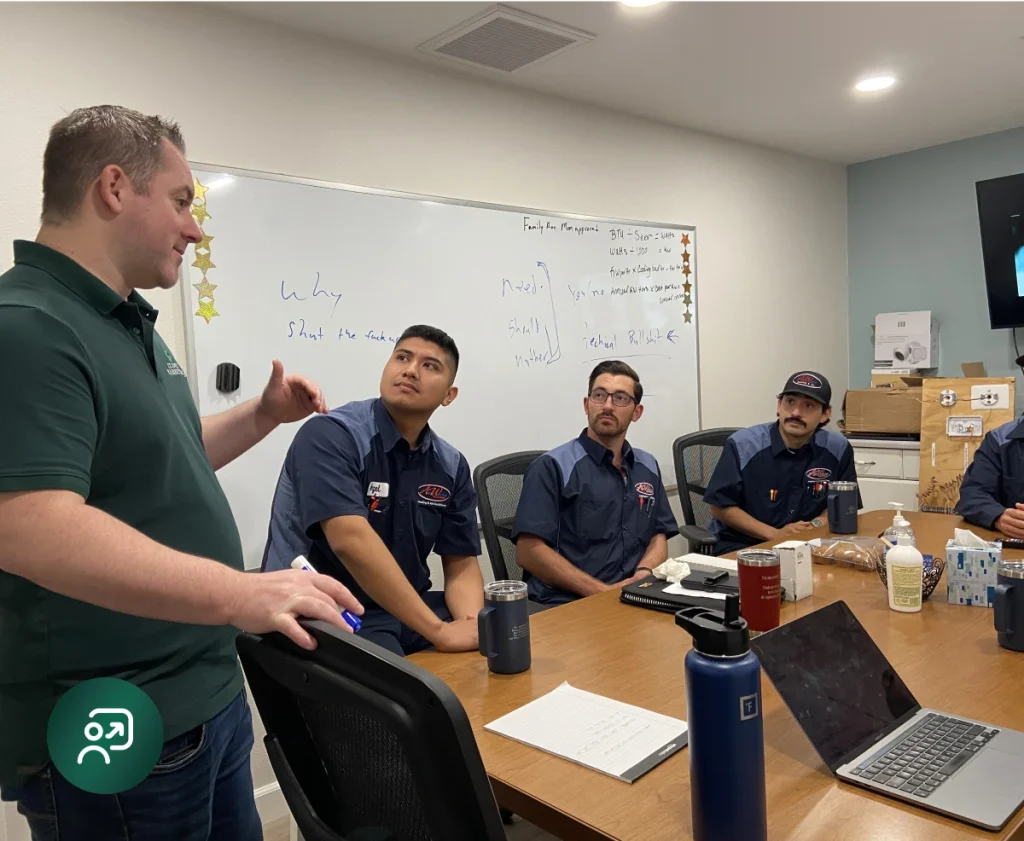
Monday Morning Huddles: Start each week with a quick team meeting. Share the week’s goals and any challenges.
Monthly Skill Shares: Have one person teach the team something new each month.
Quarterly Process Reviews: Look at one part of your business and ask “How can we make this better?”
Annual Team Building: Do something fun together outside of work.

Focus on Shared Goals
The rocks in the tumbler all had the same goal—becoming polished. Your team needs clear, shared goals too:
- Customer satisfaction scores
- Response time targets
- Quality standards
- Safety records
- Revenue goals
When everyone understands how their job helps reach these goals, friction becomes helpful instead of harmful.
Real Examples That Work
For Plumbing Companies
Pair your experienced plumber with a newer technician on tough jobs. The friction of explaining techniques helps both:
- The veteran learns to teach better
- The newcomer gains real-world skills
- Both develop better problem-solving abilities
For HVAC Businesses
Create mixed teams for big installations. When your installer works with your maintenance tech:
- The installer learns about long-term maintenance needs
- The maintenance tech understands installation challenges
- Both create better solutions for customers
For Electrical Contractors
Have technicians review each other’s work before inspection. This creates good friction that:
- Improves safety standards
- Catches mistakes early
- Spreads knowledge across the team
- Builds quality pride
For Roofing Companies
Rotate crew members between different types of roofing jobs. When your shingle expert works with your tile specialist:
- The shingle installer learns about tile weight considerations
- The tile expert understands shingle durability factors
- Both improve their overall roofing knowledge
For Garage Door Services
Cross-train your installation and repair teams. When they work together:
- Installers learn what commonly breaks down
- Repair techs understand installation best practices
- Both teams prevent future service calls
For Solar Companies
Have your sales team work alongside installation crews occasionally:
- Sales people understand real installation challenges
- Installation crews learn what customers were promised
- Both teams create more accurate proposals
For Flooring Businesses
Mix experienced employees with new hires on different material types:
- Hardwood specialists learn about luxury vinyl techniques
- Carpet installers understand tile preparation needs
- Everyone becomes more versatile and valuable
When the Tumbler Isn’t Working
Sometimes the process breaks down. Here’s how to fix it:
Problem: People avoid conflict completely Solution: Show them how to disagree respectfully. Model it yourself.
Problem: Friction becomes personal attacks Solution: Stop the meeting. Refocus on the work problem, not personality issues.
Problem: Some people won’t participate Solution: Talk to them privately. Find out why they’re resistant.
Problem: The process feels chaotic Solution: Add more structure. Set clear rules and time limits.
The Big Payoff
Building a rock tumbler team takes time. But the rewards are huge:
Less Turnover: People stay when they feel valued and challenged.
Better Customer Service: Your team works together to solve problems.
Higher Profits: Less waste, fewer mistakes, better efficiency.
Better Reputation: Word spreads about your great service.
Less Stress for You: Your team handles problems without you.
Your Next Steps
- Look at your team. Who are your rough rocks? What needs polishing?
- Start small. Pick one simple way to create good friction this week.
- Make it safe. Show your team that problems are learning opportunities.
- Be patient. Like those rocks in the tumbler, change takes time.
- Keep at it. The best teams are built through daily practice.
Frequently Asked Questions
Q: What if my workers don’t want to participate? A: Start with your most willing people. Others will join when they see the benefits.
Q: How long does this take to work? A: You’ll see small changes in weeks. Big changes take months. Be patient.
Q: What if people start arguing too much? A: Set ground rules. Focus on problems, not people. Keep discussions about work.
Q: Do I need to be in every meeting? A: At first, yes. Later, your team can run some meetings themselves.
Q: What if my best employee doesn’t want to teach others? A: Explain how teaching others helps the whole team succeed. Make it part of their job.
The Bottom Line
Steve Jobs learned something important from that rock tumbler. Ordinary things become extraordinary through friction and time.
Your employees are those ordinary rocks. With the right process, they can become a polished team that makes your business shine.
The tumbling process isn’t always quiet or comfortable. But it works.
Start your rock tumbler today. Your business—and your team—will never be the same.
Remember: You’re not just running a home service business. You’re polishing people. You’re creating a team where everyone makes everyone else better.
That’s the real magic of the rock tumbler effect.
Ready to Build Your Winning Team?
Implementing these team-building strategies takes planning and expertise. Every home service business is different, and your team-building approach should be customized to your specific industry, team size, and company culture. Want to create a custom team-building plan for your business? Book Your Strategy Session to discover how to implement the rock tumbler method in your plumbing, HVAC, electrical, roofing, garage door, solar, or flooring company. We’ll help you identify your team’s specific development needs and create a step-by-step plan to transform your employees into a high-performing, collaborative team.