
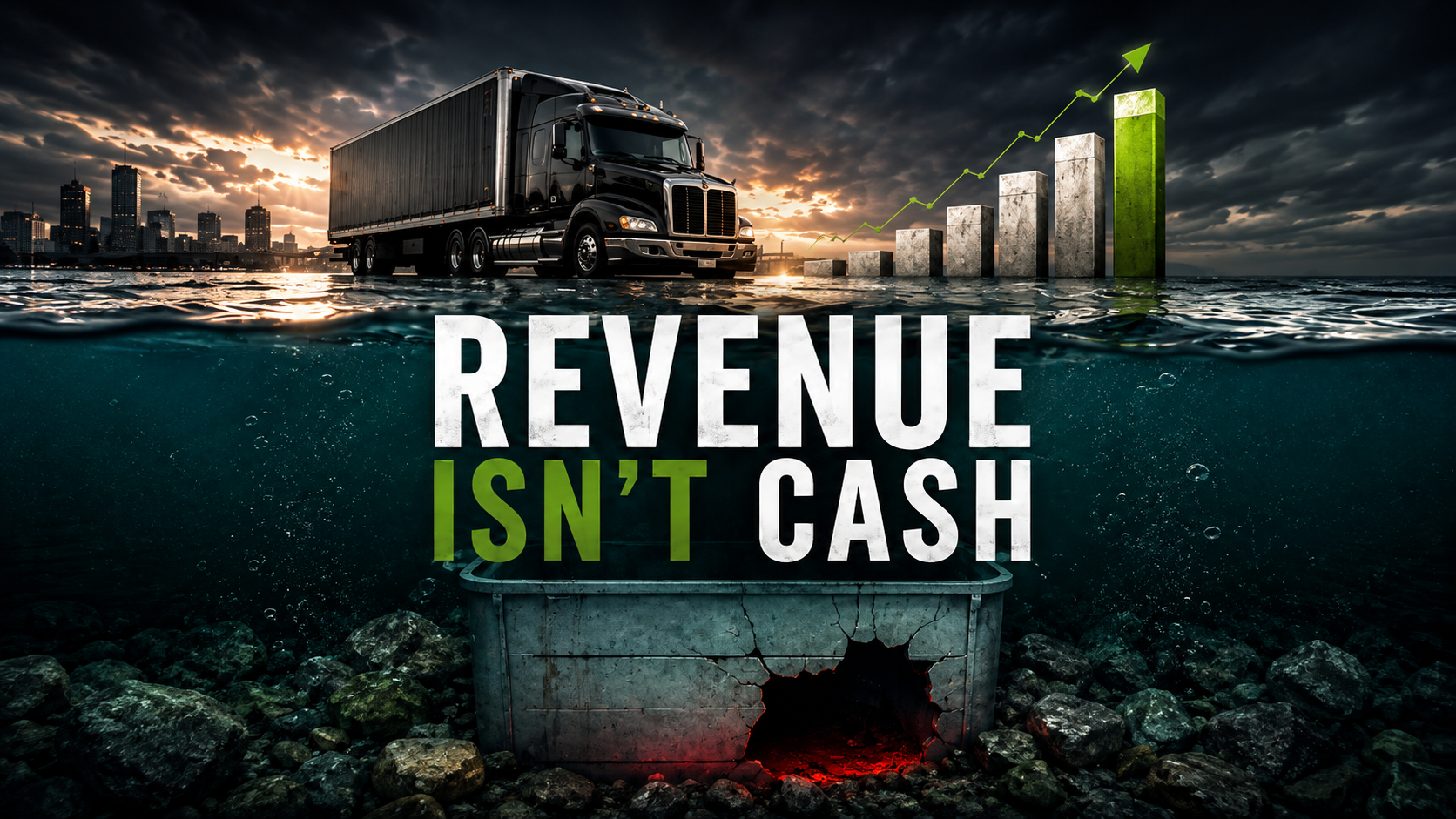
Almost every cash flow crisis in a home service business is predictable, it just wasn’t predicted, so it blindsides the owner as if it came out of nowhere. It didn’t have to. Build a rolling 13-week cash flow forecast to see gaps coming weeks in advance, watch the early warning signs, line up financing before you need it rather than after, and use the operational levers that speed up cash collection. See the gap coming, and it stops being a crisis.
That’s the whole thing. Let me open it up, because running out of cash kills businesses that were otherwise doing fine, and it’s almost always avoidable.
The Crisis That Wasn’t a Surprise
Let me describe a cash flow crisis, because you’ve probably lived one, and it always feels the same.
It’s a few days before payroll, or a big bill is due, and you go to check the account, and there’s not enough money there to cover it. Your stomach drops. Where did the money go? You were doing good work, you had jobs, things seemed fine, and now suddenly you’re scrambling, calling customers to collect, maybe putting something on a credit card, maybe having a panicked conversation with the bank, just trying to make it through the week. It feels like it came out of nowhere, a financial ambush that blindsided you when you least expected it.
Here’s the truth that changes everything about this: it didn’t come out of nowhere. Almost every cash flow crisis in a contractor business was completely predictable. The gap was building for weeks. The money coming in was going to fall short of the money going out during that stretch, and it was visible the whole time, if anyone had been looking. The crisis wasn’t a surprise because it was unpredictable. It was a surprise because the contractor wasn’t forecasting their cash, so they didn’t see it coming until it hit. The ambush only happened because nobody was watching the road ahead.
And that’s actually great news, because it means these crises are preventable. If a cash flow gap is predictable, and almost all of them are, then you can see it coming and prepare for it, which turns a terrifying surprise into a manageable bump you handle calmly. The whole difference between a contractor who gets blindsided by cash crises and one who never does isn’t luck or even how much money they have. It’s whether they’re forecasting their cash. Let me show you how to be the one who sees it all coming, starting with a distinction that trips up a lot of contractors.
Cash Flow Is Not Profit
Here’s a distinction you absolutely have to understand, because misunderstanding it is why so many profitable businesses still run out of money. Cash flow is not the same thing as profit. They’re two different things, and you can have plenty of one while running dangerously short of the other.
Profit is whether you make money over time, your revenue minus your costs across a period. Cash flow is about the timing of money moving in and out of your business, whether you actually have cash in the account when you need it. And here’s how they come apart. Say you land a big, profitable job. Great, it’ll make good money. But you have to pay for the materials now, and pay your crew now, while the customer won’t pay you for 30, 60, maybe 90 days after the job’s done. So for that whole stretch, you’ve spent real cash and haven’t collected any yet. The job is profitable, you’ll make money on it eventually, but right now, in the gap between paying out and collecting in, you’re cash-short. Profitable on paper, broke in the bank. That’s how cash flow and profit diverge.
And this bites growing businesses the hardest, which is a cruel irony. When you’re growing, you’re taking on more jobs, which means paying out more in materials and labor up front, before you collect on all of it, so growth actually eats cash. A lot of contractors are shocked to find that a growing, profitable business can be the most cash-strapped, because growth consumes cash faster than the profits come in. It’s like a boat with a great engine that’s still taking on water, the engine, your profitability, is strong, but if you’re taking on water faster than you’re moving, timing-wise, you can still sink.
This is why watching your profit isn’t enough, and why the budget I wrote about, which is mostly a profit plan, doesn’t fully protect you. You need to watch your cash flow specifically, the actual timing of money in and out, because that’s what determines whether you can make payroll this Friday. A huge number of businesses that fail were actually profitable. They didn’t fail because they weren’t making money. They failed because they ran out of cash at the wrong moment. So let’s build the tool that lets you see your cash clearly.
The Rolling 13-Week Cash Flow Forecast
Here’s the single most important tool for never getting blindsided by cash again: the rolling 13-week cash flow forecast. This is your radar. It’s what lets you see the financial weather ahead so no storm surprises you.
Let me explain it simply, because it’s not complicated. A cash flow forecast projects your cash coming in and your cash going out, week by week, for the next 13 weeks, which is about a quarter. For each week, you estimate how much cash you expect to collect and how much you expect to pay out, and you track your projected cash balance rolling forward. The result is a clear picture of what your cash position will look like each week for the next three months. And crucially, it shows you any week where your projected balance dips too low or goes negative, weeks before that week actually arrives. That’s the gap, and now you can see it coming with time to do something about it.
Why 13 weeks? Because it’s the sweet spot. It’s far enough out to give you real time to react to a coming gap, you’ll see it weeks in advance, not the day it hits. And it’s close enough that your projections can be reasonably accurate, you have a decent sense of what’s coming in and going out over the next quarter. Thirteen weeks is long enough to prepare and short enough to trust.
Why “rolling”? Because you update it every single week, always projecting 13 weeks ahead. Each week, you drop off the week that just passed, add a new week at the far end, and update your numbers with the latest reality. This keeps your radar always showing the next 13 weeks, continuously updated, so you’re never looking at stale information and your visibility always extends a full quarter into the future. The rolling part is what makes it a living early-warning system rather than a one-time snapshot.
To build it, you list, week by week for the next 13 weeks, all the cash you expect to come in, mostly collections from customers, and all the cash you expect to go out, payroll, materials, rent, loan payments, taxes, insurance, every outflow. Then you track your running projected cash balance across the weeks. Any week where that balance dips dangerously low or negative is a gap you can now see coming and prepare for. It takes a little effort to set up and a bit of time each week to maintain, but it is the difference between flying blind and flying with radar. This one tool, maintained weekly, is what turns unpredictable cash crises into gaps you calmly see coming and handle. Now, beyond the forecast itself, watch for the warning signs.
The Early Warning Indicators
Your 13-week forecast is your main radar, but there are also early warning indicators, the blips that tell you a cash gap may be building, that you should watch alongside it. These signs often show up before the gap fully materializes in the forecast, giving you even earlier warning.
Watch your collections. If customers are starting to pay you slower, if your accounts receivable are aging, if the money owed to you is taking longer to actually arrive, that’s a warning sign, because slower collections mean cash coming in later than expected, which builds a gap. Keep an eye on how fast you’re actually getting paid, and a slowdown is a flashing light.
Watch your sales pipeline. If the amount of new work coming in is dipping, that’s a warning that less cash will be coming in soon, because today’s slow pipeline is next month’s slow collections. A shrinking pipeline is an early signal of a future cash gap, well before it shows up in the bank.
Watch your costs and upcoming big expenses. Rising costs eat into your cash, and large upcoming expenses, a big tax bill, an equipment purchase, an insurance premium, an annual payment, can create a gap in a specific week. Knowing those big outflows are coming lets you plan for them instead of getting hit by them. Put the big known expenses on your radar well in advance.
These indicators, watched alongside your rolling forecast, give you the earliest possible warning that cash trouble might be ahead. The forecast shows you the projected gap, and the warning signs often tip you off even before that. Together, they mean you’re rarely, if ever, caught off guard. Now, when you do see a gap coming, here’s how you prepare for it, and the first move is one most contractors get exactly backwards.
Stage Your Financing Before You Need It
Here’s the counterintuitive move that separates the prepared contractor from the scrambling one: the best time to line up financing is when you don’t need it. Set up your financial safety net while your business is healthy, not after a crisis hits.
Think about the two scenarios. In the first, a contractor waits until they’re already in a cash crisis to go looking for financing, a line of credit, a loan, whatever. But now they’re desperate, they need the money urgently, and they often look financially shaky because they’re in a crunch. Lenders can smell desperation, and a business in a crisis looks risky, so the financing is expensive, hard to get, or simply unavailable right when it’s needed most. Trying to get money when you’re broke is the worst possible time to get it.
In the second scenario, a contractor arranges their financing in advance, while the business is healthy and strong and looks great to a lender. They set up a line of credit they don’t currently need, on good terms, precisely because they don’t need it, so they look like a safe bet. Then it just sits there, ready, as a safety net. And if their forecast ever shows a gap coming, they’ve got the financing already in place to draw on, calmly, no scramble. They arranged the umbrella while the sun was shining, so when the rain comes, they’re covered.
This is why the forecast and the financing work together. Your rolling forecast tells you whether and when you might need extra cash, weeks in advance, which lets you arrange your financing safety net ahead of time, from a position of strength, rather than begging for it in a panic. So set up your financing before you need it, while you’re healthy and look good to lenders, and have it ready. Work with your banker and financial advisor to put the right safety net in place while things are good. Then if a gap ever comes, you handle it with a tool you calmly set up in advance instead of a desperate scramble. Arrange the umbrella before it rains.
The Levers to Accelerate Cash
Beyond financing, when you see a cash gap coming, there are operational levers you can pull to accelerate the cash coming in and ease the crunch. Knowing the gap is coming, thanks to your forecast, gives you the time to pull these levers before the gap hits.
Invoice faster. A surprising number of contractors are slow to bill, letting days or weeks pass before they send the invoice, which delays every payment. Bill immediately, the moment the job is done, or even collect on the spot where you can. The faster you invoice, the faster you get paid, so speeding up your invoicing directly speeds up your cash.
Make it easy to pay. The easier you make it for customers to pay you, the faster they do, which ties right back to removing friction. Offer multiple convenient payment options, accept payment on the spot, make paying you effortless. Every bit of friction in your payment process slows your cash, so strip it out.
Collect deposits and progress payments. On bigger jobs, don’t float the entire cost yourself and wait until the end to collect. Collect a deposit up front and progress payments along the way, so the customer’s cash is funding the job as it goes rather than you fronting all of it and waiting. This dramatically reduces the cash gap on large jobs.
Tighten up collections. Stay on top of overdue accounts, follow up on what’s owed to you, and don’t let receivables age. Money sitting uncollected is cash you earned but don’t have, so tightening your collection process pulls that cash in faster when you need it.
And on the outflow side, when you know a tight week is coming, you can sometimes manage the timing of certain payments to smooth the gap. The point is, seeing the gap in advance gives you time to pull these levers, speed up your collections, and ease the crunch before it becomes a crisis. Without the forecast, you’d only discover the gap when it’s already on top of you, too late to react. With it, you’ve got time to accelerate your cash and prepare.
Get Help and Never Fly Blind Again
One honest note, the same as with budgeting. I want you to understand and watch your cash flow, because it’s your business and running out of cash is fatal, but this is another area where a good bookkeeper, accountant, or fractional CFO earns their keep many times over. They can help you build and maintain your forecast, read the warning signs, and set up the right financing. I’m not an accountant, and this isn’t specific financial advice, it’s the framework for seeing your cash clearly. Get the right professional help to build it right for your business, and understand it yourself well enough to never be blindsided.
Because that’s the whole point of all of this: never fly blind on your cash again. The contractor who forecasts their cash flow, watches the warning signs, stages financing in advance, and knows the levers to pull sees everything coming and prepares calmly. The one who doesn’t gets ambushed by crises that were predictable all along. Cash flow crises don’t have to be a terrifying part of running a contractor business. With forecasting, they become predictable, preventable bumps you see on the radar and route around. Build the radar, and stop getting blindsided.
How to Roll This Out Starting Monday
Same rhythm as always. One step at a time.
Week one: build your rolling 13-week forecast. Set up a simple week-by-week projection of your cash coming in and going out for the next 13 weeks, and track your running projected balance. Identify any weeks where the balance dips dangerously low. This is your radar, so get it built first, and commit to updating it every week.
Week two: start watching the early warning indicators. Begin tracking your collection speed, your sales pipeline, and your upcoming big expenses, the blips that signal a gap may be building. Watched alongside your forecast, these give you the earliest possible warning of cash trouble ahead.
Week three: stage your financing safety net. While your business is healthy and looks good to lenders, work with your banker and financial advisor to set up a line of credit or other safety net you don’t currently need, so it’s ready if a gap ever comes. Arrange the umbrella while the sun is shining.
Week four: sharpen your cash-acceleration levers. Tighten up your invoicing speed, make it easy for customers to pay, set up deposits and progress payments on big jobs, and firm up your collections process. Get your money in faster, and get professional help to build and maintain the whole system right.
Four weeks to build the radar and the tools that mean you never get blindsided by a cash crisis again, turning predictable gaps into bumps you calmly see coming and prepare for.
Frequently Asked Questions
Why do cash flow crises feel like they come out of nowhere? They feel that way, but almost all of them were predictable and simply weren’t predicted. The gap between money coming in and money going out was building for weeks and was visible the whole time, but the contractor wasn’t forecasting their cash, so they didn’t see it until it hit. The crisis is a surprise only because nobody was watching the road ahead, which means forecasting prevents it.
What’s the difference between cash flow and profit? Profit is whether you make money over time; cash flow is about the timing of money moving in and out. You can be profitable and still run out of cash, for example when you pay for materials and labor now but won’t collect from the customer for 60 days. Growing businesses get squeezed hardest because growth consumes cash before profits arrive. Many failed businesses were profitable, they just ran out of cash.
What is a rolling 13-week cash flow forecast? It’s a projection of your cash coming in and going out, week by week, for the next 13 weeks, with a running projected balance so you can spot any week you’ll be short well before it arrives. Thirteen weeks is far enough to give you time to react and close enough to be fairly accurate. “Rolling” means you update it weekly, always looking a full quarter ahead, so it’s a living early-warning system.
When should I arrange financing like a line of credit? Before you need it, while your business is healthy and looks strong to lenders. If you wait until you’re in a crisis, you look desperate and risky, so financing becomes expensive, hard to get, or unavailable exactly when you need it most. Arrange your safety net in advance from a position of strength, and have it ready to draw on if your forecast ever shows a gap coming. Arrange the umbrella before it rains.
How can I speed up cash collection when I need to? Invoice faster, ideally the moment a job is done. Make it easy for customers to pay with convenient options and on-the-spot payment. Collect deposits and progress payments on big jobs so you’re not floating the entire cost. And tighten up your collections on overdue accounts. Seeing a gap coming in your forecast gives you the time to pull these levers before the crunch actually hits.
The Bottom Line
Cash flow crises kill contractor businesses that were otherwise doing fine, and the cruelest part is that almost all of them were predictable. The gap was coming, the signs were there, and the only reason it became a crisis is that nobody was forecasting the cash. Remember that profit and cash flow are different things, and a profitable, growing business can still run out of cash at the wrong moment.
So build the radar. Set up a rolling 13-week cash flow forecast and update it weekly, so you see gaps coming a full quarter out. Watch the early warning signs in your collections, pipeline, and upcoming expenses. Stage your financing safety net while you’re healthy and look good to lenders, not after a crisis hits. And know the levers to accelerate your cash, faster invoicing, easy payment, deposits and progress payments, tighter collections, so you can ease a crunch you see coming. Get good professional help to build it all right.
Do that, and cash flow crises stop being terrifying ambushes and become predictable bumps you spot on the radar and route around calmly. Stop flying blind on your cash. Build the forecast, watch the signs, prepare in advance, and never get blindsided again.
If you want help building the cash flow forecasting and financial systems that keep your business off the crisis roller coaster, that’s the work we do with contractors every day. Book a free strategy session and let’s get your cash under control.
Josh Kelly is Co-Founder of Clover Growth Partners, where he helps home service contractors build businesses that grow without depending on them being in every truck. This article is general information, not accounting or financial advice. Consult a qualified accountant or financial professional for your specific situation.